
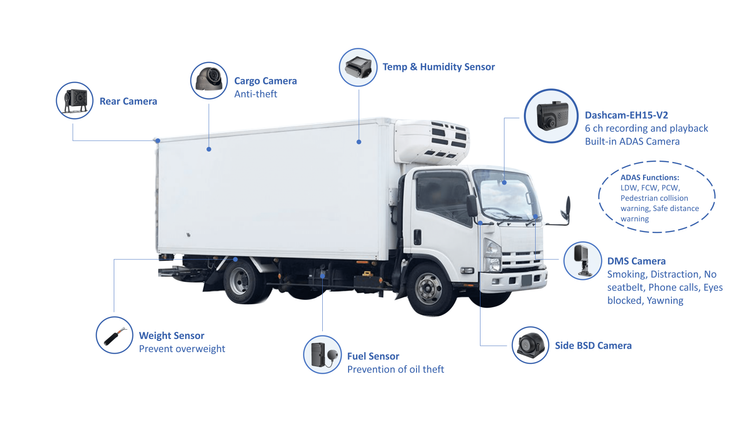
Problem diagnosis: where last‑mile operations break down
Deliveries fail, costs climb, and customer complaints multiply when van fleets lack timely, objective visibility. The core issues are predictable: route deviations that waste fuel; at-risk driving that increases claims; ambiguous proof-of-service that stalls customer disputes. A technical fix is not a luxury — it is a requirement. Integrating devices such as AI MDVR at the vehicle level provides a direct data stream that exposes these failures in actionable form.
Technical solution: on‑vehicle video plus analytics
An effective mitigation strategy combines hardware, edge AI, and fleet systems. The hardware captures events; edge models flag risky behavior; fleet telematics correlate speed, route, and delivery status. Deploying a mature vehicle video monitoring system yields event clips tied to timestamps and GPS, enabling forensic review and automated alerts. Key technical components to verify before procurement:- Camera resolution and low-light performance.- Onboard inference capability to reduce upstream bandwidth.- Secure, tamper-evident storage and cryptographic timestamps.- Standardized APIs for integration with route planners and dispatch systems.
Operational integration: workflows that turn video into decisions
Video alone is noise; a workflow turns it into control. Define event thresholds that trigger review; route exceptions go to dispatch, harsh-braking and near-miss events feed driver coaching. Practical sequence:- Set event filters to limit false positives.- Route flagged clips to a small review team within 24 hours.- Pair video feedback with short coaching sessions and performance metrics.A field rollout I observed with a large urban courier fleet in London reduced repeat route deviations by changing dispatch rules and implementing targeted coaching within six weeks — the key was disciplined review cadence and clear metrics.
Common pitfalls and how to avoid them
Teams often buy cameras and expect instant results. Typical mistakes:- Overcapturing: storing too many hours without indexing increases costs and slows root-cause analysis.- Ignoring privacy: failing to mask interiors or to communicate policy invites legal pushback.- Poor integration: siloed video that does not map to telematics reduces investigative speed.Mitigations are simple and technical: configure onboard retention policies, apply automated redaction where required, and ensure event metadata aligns with fleet management keys (vehicle ID, driver ID, route ID).
Alternatives and trade‑offs
Options exist beyond continuous multi‑camera setups. Consider:- Single forward-facing camera with high-quality event capture: lower cost, limited interior context.- Cloud-heavy architectures: easier central search, higher recurring costs and latency.- Edge-first systems: higher upfront device intelligence, lower network cost and faster alerts.Choose based on fleet scale, urban density, and regulatory constraints. Larger urban fleets benefit from edge inference to contain bandwidth spikes during peak hours; smaller operations can prioritize cost and cloud searchability.
Conclusion: practical steps to close the loop
Start by defining the problem you must solve — missed deliveries, damage disputes, or safety incidents — and map required outputs: clip length, retention, and alert types. Procure hardware that supports onboard analytics, enforce a clear review process, and measure outcome metrics monthly. The result is not theoretical: it is a measurable reduction in disputes and risk exposure achieved by aligning device capability, operational discipline, and systems integration, a combination that experienced providers such as BSJ design into deployments without overstating benefits.