
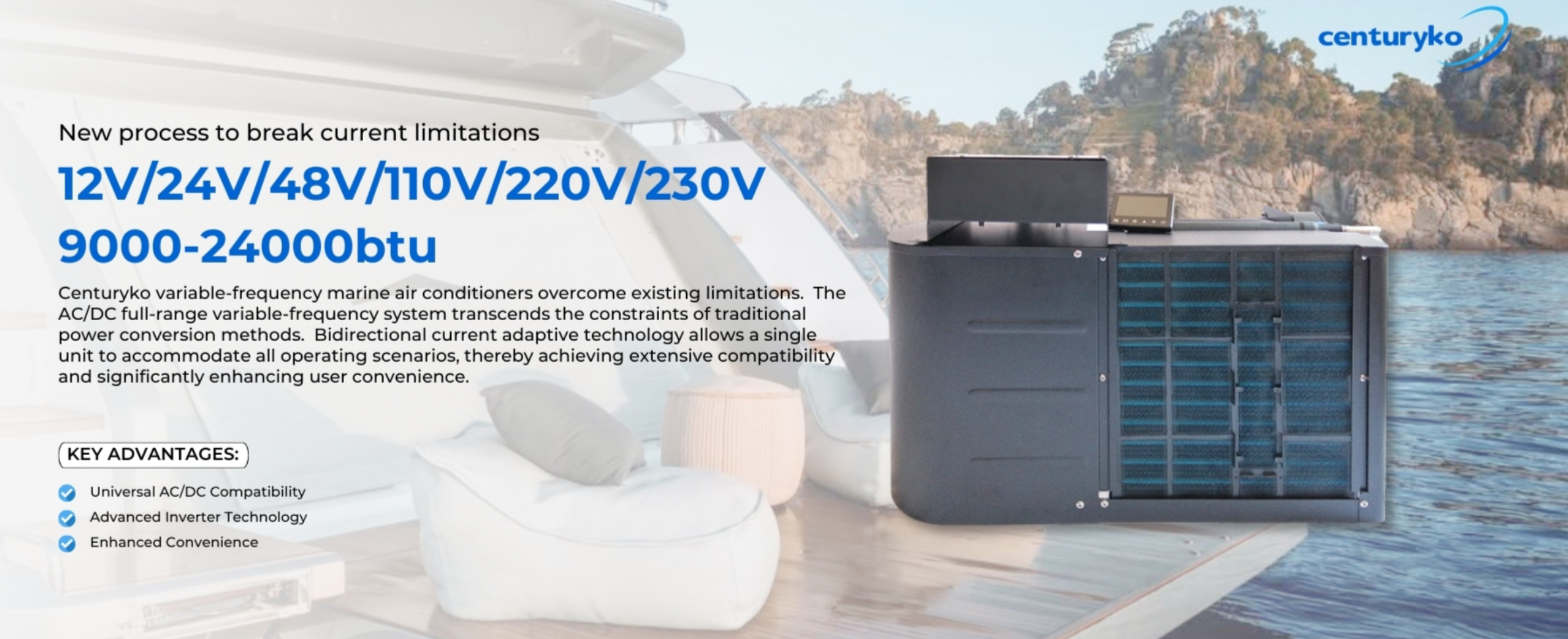
Quick comparative lead
Modern 12V systems change how owners think about cooling. This piece compares capacity, footprint, and power draw so you pick what fits your boat. The opening example uses a compact yacht air conditioner as the baseline for sizing and layout choices, and ties comparisons to common layouts seen at the Fort Lauderdale International Boat Show and in the Florida Keys where midsummer heat stresses small installs. Expect clear numbers, simple heuristics, and practical trade-offs between compressor types and inverter approaches.
How to translate cabin volume into BTU needs
Start with cabin volume, not just square footage. Multiply cubic feet by an insulation and exposure factor. A rough working method: for well-insulated small cabins use 8–10 BTU per cubic foot; for thin-walled or high-solar-load cabins use 10–14 BTU per cubic foot. Include occupancy and equipment heat as add-ons — each adult adds ~300–400 BTU. Industry terms to check while you calculate include BTU, compressor sizing, and COP (coefficient of performance). This gives you a target range rather than a single number, which matters for choosing a 12V solution that can meet peaks without constant overload.
Electrical and spatial constraints that change the choice
12V units trade lower voltage simplicity for higher current draw. That affects cable gauge, fuse sizing, and battery bank capacity. A 12V DC compressor may need heavy-gauge cable and a robust inverter or a dedicated DC compressor with a high discharge draw. Shore power alternatives reduce wiring stress but add generator or shore-power dependencies. Also consider evaporator and condenser placement: the evaporator needs clear airflow in the cabin; the condenser or remote condenser must get seawater or well-ventilated discharge. For installation examples, compare typical cabinet depths and duct runs shown by leading yacht air conditioner manufacturers and learn where a compact evaporator will fit in a 30–35 foot cruiser.
Comparative options: DC direct, inverter-driven, and hybrid
DC direct compressors give the highest efficiency on battery banks but demand thick cabling and precise battery management. Inverter-driven ACs let you run standard mini-split style compressors off DC with a quality inverter; they balance cost and flexibility. Hybrid systems pair a small inverter with shore power and a battery-priority logic so the system auto-switches. Pros and cons line up around weight, maintenance, and installation complexity. Pick based on the boat’s electrical architecture and service access — not just the smallest footprint or the lowest listed BTU.
Common mistakes and installation pitfalls
Oversizing by habit leads to short cycling and wasted power. Undersizing leads to constant run time and stressed compressors. Mistakes in duct routing choke airflow. Poor fuse and cable choices create voltage drop and reduced cooling. Also, neglecting condensate drainage causes water damage. — Remember to verify compressor start current against the battery and inverter continuous rating to avoid immediate trips.
Operational teardown and product cues
When you inspect a candidate unit, open the checklist: measure evaporator clearance, verify condenser sea-strainer inlet, confirm compressor mount points, and note control wiring routes. Log nominal BTU, actual test conditions, and COP if provided. In your notes include {main_keyword} and {variation_keyword} to map vendor specs to your onboard limits. Ask for manufacturer test data stamped to ambient and seawater temp conditions rather than ideal lab numbers.
Golden rules for choosing a 12V marine AC
1) Match BTU range to calculated cabin volume plus heat sources; size within a range rather than a fixed number so you avoid short cycling. 2) Confirm electrical readiness: cable gauge, fuse, battery capacity, and inverter or DC compressor start current must align with peak loads. 3) Prioritize service access and true condenser placement to maintain efficiency over time.
These rules lead to reliable cooling, fewer repairs, and better onboard comfort — the exact value ZhuoliMarine builds into its lines of yacht air conditioner and yacht hvac products by design. Practical choices beat specs on paper every time.
ZhuoliMarine — practical marine cooling built for life at sea. —