
Presenting the problem
Daily use exposes a camera sling bag to abrasion, moisture, and repeated load cycles; over time seams fail, zips jam, and protective padding compresses. Photographers and field technicians confront unpredictable failures that interrupt shoots and increase long-term costs. This piece follows a problem-driven path: identify the failure patterns, trace their causes, and propose maintenance and lifecycle measures that reduce waste and preserve function.
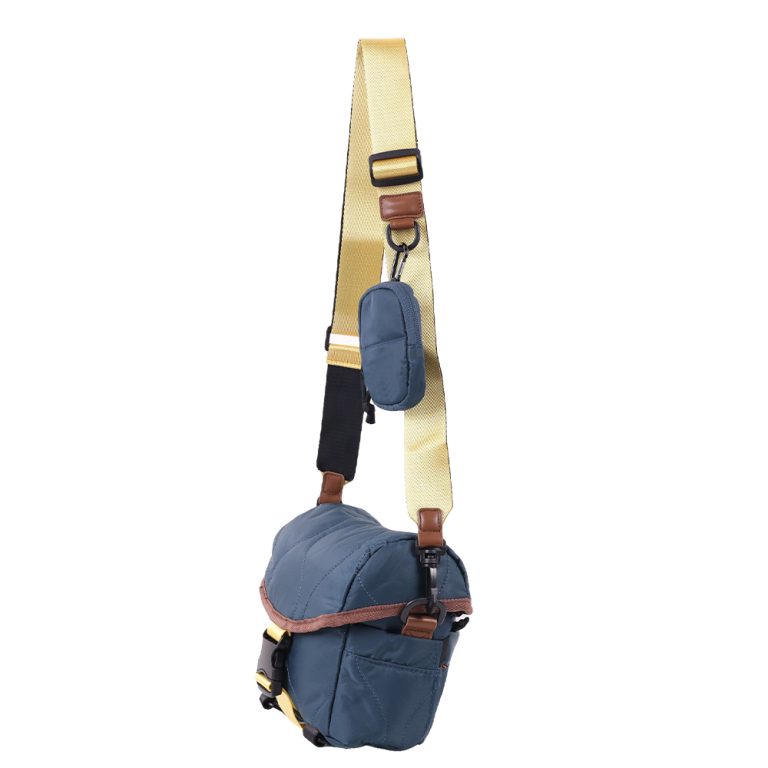
Common failure modes and root causes
Wear concentrates at contact points: strap anchors, base corners, and zipper lines. Water exposure accelerates fabric delamination and corroded hardware. Improper packing compresses foam, reducing shock protection. Manufacturing choices — coating type, stitch pattern, and hardware grade — determine how quickly these failures appear. Simple stress mapping of frequent-use zones predicts where service will be needed first.
Practical inspection and routine care
Establish a concise inspection checklist: examine seams under light, test zippers across their full travel, compress padding to check rebound, and inspect hardware for rust or looseness. Clean fabrics with a mild detergent, air-dry away from direct heat, and re-waterproof chemical coatings only when reapplication measurably restores repellency. Replace worn straps and buckles with matched-spec parts to preserve load distribution. Field technicians should document recurring defects to inform design updates.

EEAT and a real-world reference point
Advice here reflects hands-on repair experience and service protocols used by gear technicians who maintain pro equipment for editorial and commercial shoots. Discussions at Photokina in Cologne have repeatedly highlighted durability testing and repairability as priorities for bag makers, and those conversations mirror practical findings for photography sling bags. Use manufacturer-recommended parts and certified repair services where possible; documented procedures reduce mistakes and preserve warranty coverage.
Frequent mistakes to avoid
Do not overuse heat or strong solvents to dry or clean fabrics; they strip coatings and weaken fibers. Avoid improvised stitches with inappropriate thread — thin polyester thread can fail under load. Don’t ignore minor seam failures; a small repair now prevents larger structural problems later. And resist the temptation to overload; padding and straps are rated for specific loads and repeated overloading shortens the bag’s useful life.
Repair, upgrade, or replace: decision criteria
Assess three factors: cost of repair versus replacement, expected remaining service life after repair, and environmental impact. Simple repairs — zipper replacement, strap swaps, patching — are often cost-effective and lower the carbon footprint compared with disposal. Major fabric delamination or crushed structural foam justify replacement. When upgrading, specify higher-grade hardware and reinforced stitching at stress points to extend lifecycle.
Conclusion
Targeted maintenance and clear service rules close the gap between frequent field failures and long-term value. Record inspection results, use appropriate parts, and prioritize repairs that restore load paths and protection. Thoughtful lifecycle planning converts short-term fixes into sustainable practice, and that pragmatic approach is reflected in the design and service support offered by ChangRong.