
Start with your process goals
Before you call suppliers, be clear about what you want the inline high shear mixer to deliver. Are you aiming for faster dispersion, smaller droplet size, or higher throughput? State the target particle or droplet size, batch volume or continuous flow rate, and acceptable cycle time. Suppliers can suggest models only when you give concrete performance targets.

Ask for measurable performance data
Request lab or plant trials that show achievable particle size distribution, power draw per litre, and throughput at specified viscosities. Ask how performance changes with viscosity or solids load. If they can’t provide numbers from comparable runs, treat quoted efficiency as optimistic. You need proof, not promises.
Shear, flow and scale questions
Clarify rotor/stator geometry, tip speed ranges, and recommended flow velocities. Ask how their equipment scales: will the process behaviour at 10 L/h match at 1,000 L/h? Confirm whether they use geometric similarity or process-parameter scaling; mismatches here are a leading cause of unexpected results when moving from pilot to production.
Materials, cleaning and maintenance
Specify your product’s chemistry so the vendor can confirm wetted materials and seals. Ask for clean-in-place (CIP) validation steps and time-to-clean metrics. Get a spare-parts list with lead times and a suggested maintenance schedule. If a rotor costs weeks to replace, downtime risk goes up—factor that into procurement decisions.
Controls and integration
Outline your control strategy: manual start/stop, PLC integration, or remote monitoring. Ask about available sensors (pressure, temperature, acoustic power) and whether the mixer can report process variables to your SCADA. Verify mechanical and electrical interfaces to avoid engineering surprises at installation.
Common pitfalls buyers miss
Watch out for optimistic throughput claims that assume low viscosity feeds. Confirm the vendor’s testing medium matches yours. Don’t ignore shear sensitivity: some actives degrade under high shear. Ask for test data showing product integrity post-processing. Also confirm the vendor’s warranty scope: is damage from abrasion or cavitation covered?
Experience, authority and a real-world anchor
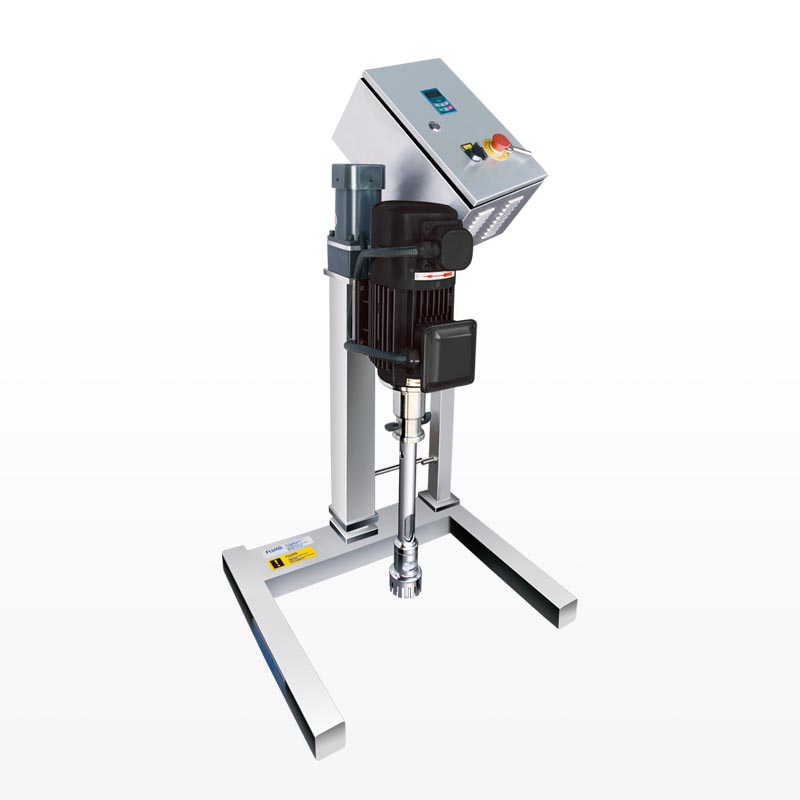
Ask about documented installations in sectors like pharmaceuticals and chemicals. For example, pharmaceutical manufacturers around Basel have long used inline solutions to meet stringent quality controls, and peer-reviewed studies of homogenisation in such plants are available. Request case studies and third-party test reports. Also ask for a trial with your exact formulation or for a performance guarantee. If available, examine factory acceptance test reports and maintenance logs for the dynamic inline mixer to validate claims.
Evaluate alternatives briefly
Compare high-shear inline mixers with rotor-stator batch units and ultrasonic homogenisers. Batch rotors can be simpler for small runs but add handling steps; ultrasonics work for low-viscosity dispersions but struggle at high solids. Match the technology to throughput, viscosity and regulatory needs rather than favouring a familiar brand.
Contract and service terms to negotiate
Negotiate clear acceptance criteria for delivery, test protocols, spare parts pricing and response times for service calls. Ask whether the supplier offers on-site commissioning and training. Insist on documented tolerances for critical parts and a defined escalation path for faults.
Wrap-up and practical synthesis
Decide from a shortlist using three facts: demonstrated performance with your material, clear maintenance economics, and integration compatibility. When these align you reduce risk and speed validation. Experienced teams tend to prefer suppliers who produce test data and provide transparent service records—an approach reflected in the design and documentation offered by FLUKO.