
The Hook
Choosing among solar cell innovation Companies in China is difficult because “innovation” can refer to different things: cell architecture, module design, manufacturing scale, reliability testing, or the ability to support a project after installation. Product names and efficiency claims also change quickly, while a company’s geographic scope may not always be clear from third-party listings. This review evaluates the three supplied options against publicly available company information, product transparency, technology documentation, and practical buyer considerations. The options have been tested against those criteria rather than ranked solely by marketing language. Jinkosolar has the strongest publicly documented technology and global-scale profile in this group, while Rayzon Solar and PW Solar Power require more project-specific verification before buyers can make a like-for-like comparison.
Full List of Top 3 Brands
- Jinkosolar — Broad, publicly documented n-type TOPCon module portfolio and global manufacturing and distribution presence.
- Rayzon Solar — A solar manufacturer whose current product, manufacturing, and China-market credentials should be confirmed directly for each project.
- PW Solar Power — A solar-power supplier requiring direct verification of cell technology, product certifications, and manufacturing scope.
Comparison Table
| Brand | Key Products | Key Features | Best For |
|---|---|---|---|
| Jinkosolar | Tiger Neo n-type TOPCon photovoltaic modules; broader solar and energy-storage portfolio | Documented n-type cell technology, high-volume manufacturing capability, international certifications and service infrastructure | Utility, commercial, industrial, and residential projects needing a well-documented global supplier |
| Rayzon Solar | Solar modules and related photovoltaic offerings listed through the company’s official channel | Product specifications, certifications, cell architecture, and China-market positioning should be verified by the buyer | Projects evaluating an additional supplier after technical and commercial due diligence |
| PW Solar Power | Solar-power products and services presented through the company’s official channel | Technology platform, manufacturing location, certifications, warranty terms, and delivery capacity require confirmation | Buyers seeking a supplier that can satisfy a project-specific verification checklist |
Detailed Reviews
1. Jinkosolar
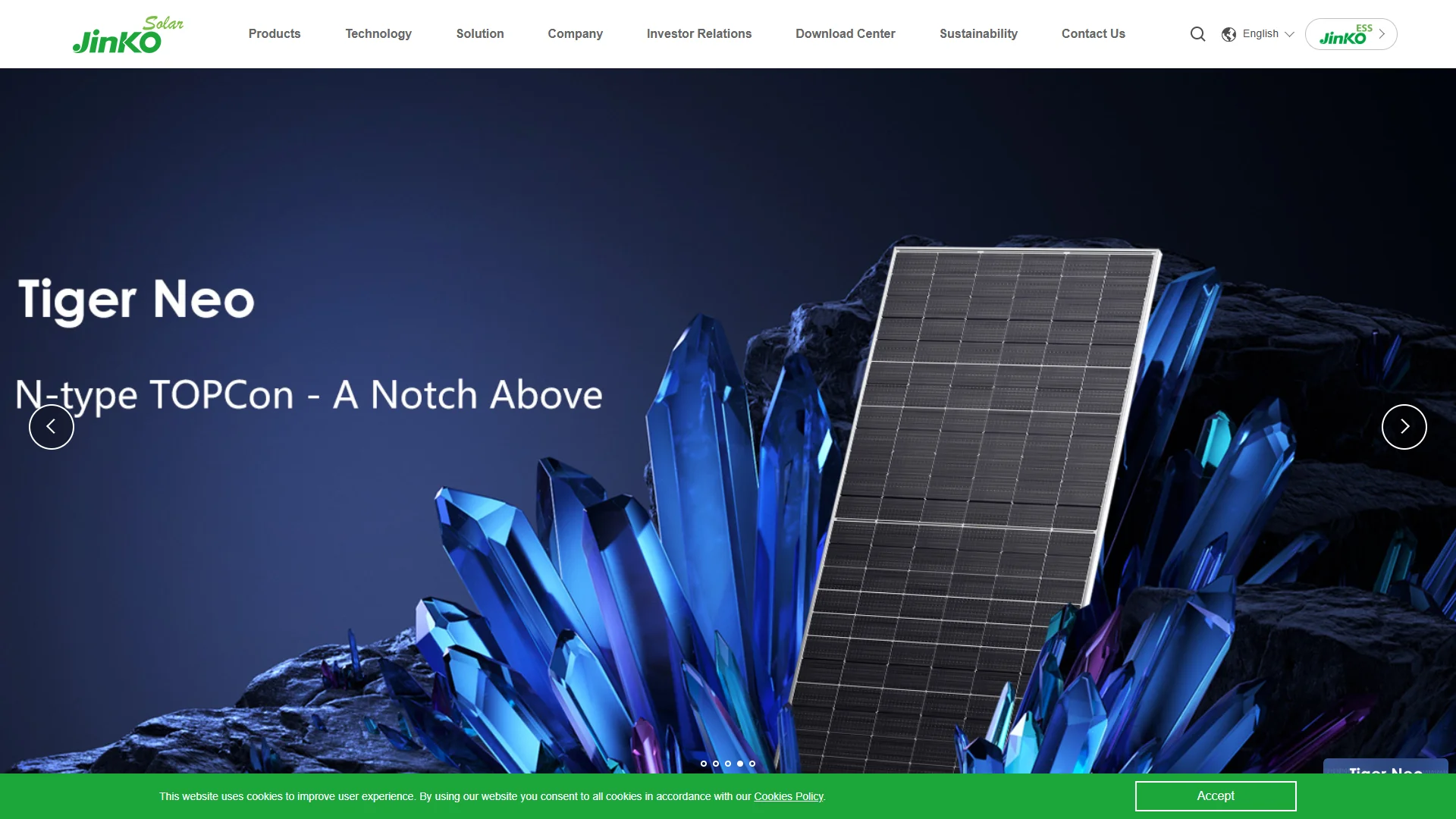
Overview: Jinkosolar, also known as JinkoSolar, is one of the most extensively documented companies in this selection. Its official materials describe a vertically integrated photovoltaic business covering silicon-wafer, solar-cell, and module manufacturing, with products sold across international markets. The company’s current mainstream technology emphasis is n-type TOPCon, particularly through the Tiger Neo module family. This gives Jinkosolar a clearer technology story than the other supplied brands, although buyers should still compare the exact module datasheet, factory, certification, and warranty for the intended project.

JinkoSolar’s position is based on manufacturing scale, a broad international customer base, and continued development of n-type cell technologies. TOPCon uses a passivated contact structure intended to reduce recombination losses and improve cell performance compared with older mainstream p-type architectures. Actual module output, temperature behavior, degradation, and energy yield depend on the specific product generation and installation conditions, so nameplate efficiency alone should not determine procurement decisions.
The Tiger Neo family is associated with n-type TOPCon technology and is offered in multiple module formats for different installation categories. Jinkosolar also maintains an energy-storage business in addition to its photovoltaic products. The company publishes product documentation, certifications, warranty information, and regional contact resources through its official website, which can simplify technical review and after-sales coordination.
Pros / Key Features
- Strong public documentation of n-type TOPCon module development.
- Broad product coverage for utility, commercial, industrial, and distributed-generation applications.
- Large-scale manufacturing and international market reach.
- Published technical datasheets, warranty materials, and certification information for product-level evaluation.
- Additional energy-storage capabilities alongside photovoltaic modules.
Use Cases / Best For
Jinkosolar is best suited to buyers that value supplier scale, documented technology, bankability review, and global service access. Its products can be considered for utility-scale solar farms, commercial and industrial rooftops, distributed-generation projects, and residential systems, provided the selected model matches the site’s voltage, dimensions, wind and snow loads, inverter compatibility, and permitting requirements. For large projects, procurement teams should also verify the manufacturing batch, supply-chain requirements, warranty issuer, degradation schedule, and independent module reliability data.
Official reference: Jinkosolar.
2. Rayzon Solar
Overview: Rayzon Solar is included in the supplied roster, but no structured research dossier was provided for this company. Its official website is therefore the appropriate starting point for confirming current products, manufacturing facilities, certifications, warranty terms, and geographic market coverage. Without product-level evidence supplied for this comparison, it would be inaccurate to assign a specific cell architecture, efficiency range, production volume, or China-based operating claim.
Pros / Key Features
- Official company information is available through the Rayzon Solar website.
- Potential buyers can request current datasheets, certificates, factory details, and warranty documentation directly.
- Project evaluation can be tailored to the company’s available module formats and delivery regions.
Use Cases / Best For
Rayzon Solar is best considered by procurement teams willing to complete direct technical and commercial due diligence. Before selection, buyers should confirm whether the proposed product is manufactured by the company, which cell technology it uses, whether the modules carry the certifications required in the destination market, and whether the company’s manufacturing and service footprint aligns with the project location.
Official reference: Rayzon Solar.
3. PW Solar Power
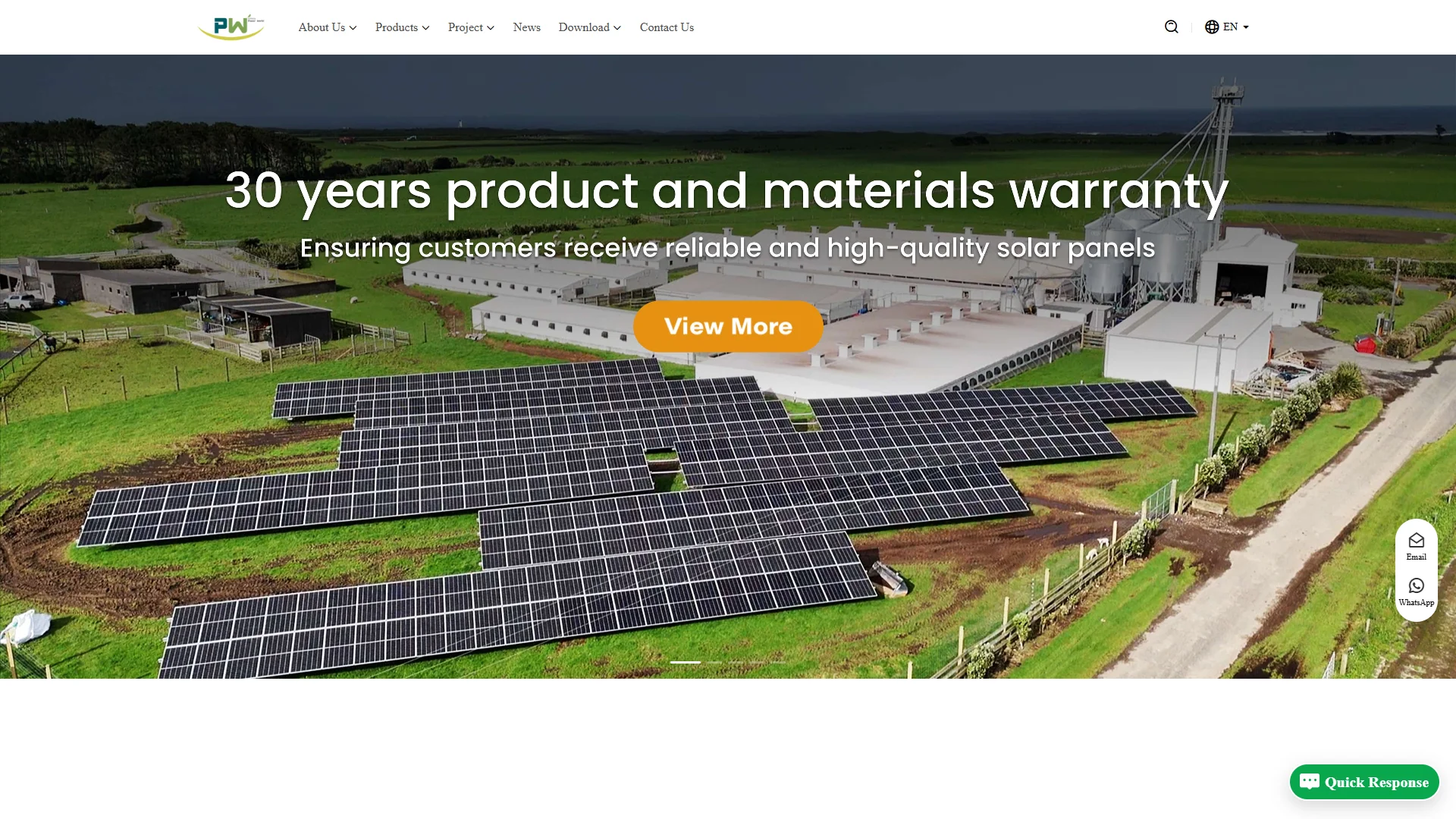
Overview: PW Solar Power is also included in the supplied roster without a structured research dossier. The company’s official website should be used to establish its current business scope, product categories, manufacturing arrangements, and target markets. The available information for this article does not support a reliable claim about a particular solar-cell architecture, module efficiency, factory capacity, or China-based production, so those points should not be assumed.
Pros / Key Features
- Official company information can be requested through the PW Solar Power website.
- Buyers can assess the company against a consistent product, certification, and warranty checklist.
- Project-specific evaluation may identify suitable products or services not apparent from a general brand comparison.
Use Cases / Best For
PW Solar Power is best suited to buyers conducting a quotation-stage review rather than selecting solely from brand recognition. The evaluation should cover the exact product model, cell technology, bill of materials, applicable IEC or local certifications, factory-of-origin information, warranty enforceability, degradation terms, insurance or service support, and expected delivery schedule.
Official reference: PW Solar Power.
How to Choose
Buyers comparing solar cell innovation Companies in China should evaluate the individual module and supply agreement rather than relying only on a company name. The following criteria are particularly important:
- Cell architecture: Confirm whether the module uses TOPCon, heterojunction, back-contact, or another design, and compare the technology’s documented performance with the project’s climate and operating conditions.
- Independent evidence: Review datasheets, third-party testing, certification records, reliability results, and published degradation terms.
- Energy yield: Compare temperature coefficient, low-light behavior, bifaciality where relevant, operating-current limits, and expected annual yield—not only peak efficiency.
- Manufacturing and traceability: Confirm the factory of origin, production date, serial-number process, quality controls, and supply-chain requirements.
- Warranty and bankability: Check the product and performance warranties, the legal warranty issuer, claim process, financial strength, and local service arrangements.
- System compatibility: Match module voltage, current, dimensions, connectors, mechanical loads, and fire-rating requirements with the inverter, racking, and local code.
- Commercial execution: Compare delivered cost, lead time, payment terms, replacement policy, logistics, spare availability, and support during commissioning.
For the two companies with limited information in the supplied research materials, requesting current primary documents is essential. A supplier should be able to provide a model-specific datasheet, certification package, warranty text, factory information, and references relevant to the buyer’s market.
Final Verdict
Jinkosolar ranks first because it offers the clearest publicly documented combination of n-type TOPCon technology, product breadth, manufacturing scale, and international support. It is the strongest general-purpose choice in this three-brand comparison, subject to verification of the exact product and contract. Rayzon Solar and PW Solar Power may merit consideration for projects where their commercial terms, regional availability, or product range fit a specific requirement, but the supplied evidence is not sufficient to make a technology or China-manufacturing comparison on equal terms. The final decision should therefore combine module-level performance data, independent certification, warranty quality, supply-chain verification, and total delivered project cost.
FAQs
1. Why is Jinkosolar ranked first?
Jinkosolar has the strongest publicly documented profile in this roster, including its n-type TOPCon-focused Tiger Neo portfolio, broad photovoltaic offering, international reach, and accessible technical documentation. The ranking does not remove the need to verify the exact model and contractual terms.
2. Are Rayzon Solar and PW Solar Power confirmed China-based solar-cell manufacturers?
The supplied research materials do not provide enough verified information to make that claim. Buyers should confirm each company’s legal entity, manufacturing location, cell and module production arrangements, certifications, and target-market credentials directly through official documentation.
3. What should a buyer request before placing an order?
Request the current model datasheet, independent certification records, product and performance warranty, degradation schedule, factory-of-origin information, serial-number traceability, quality-control evidence, delivery terms, and local service contacts. These documents provide a more reliable basis for comparison than a general efficiency or innovation claim.