
Opening the workshop
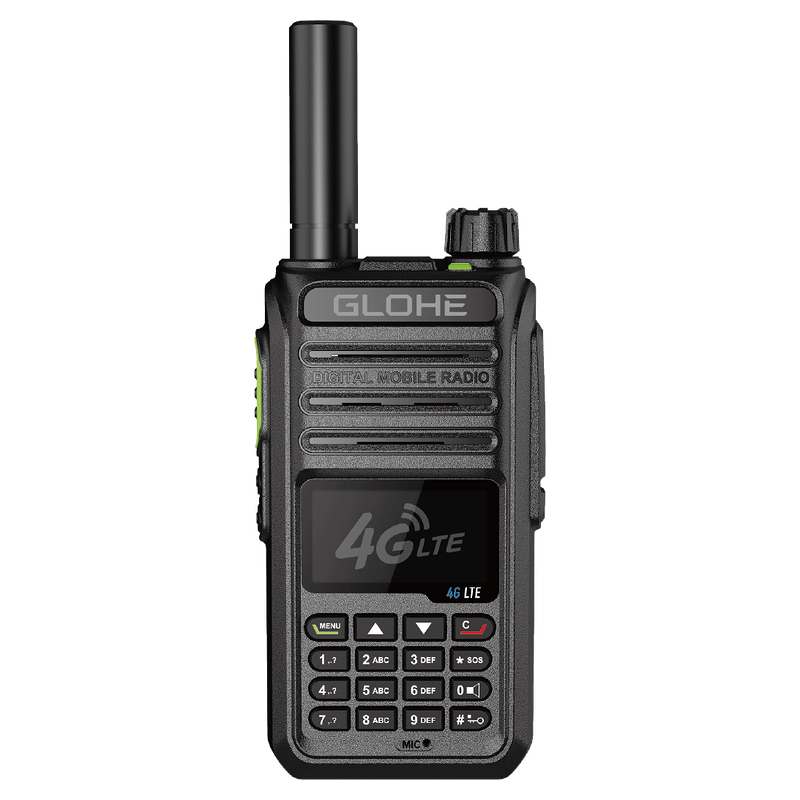
We start with a problem that’s stubborn and simple: teams need reliable, immediate voice across wide territory without the weight of legacy trunked systems. The idea begins on paper — a sketch of buttons, a thought for battery life, a promise of ruggedness — and it becomes a device you trust on a wet night shift. Along the way you’ll hear talk of poc radio, but the real story is how a concept tightens into a working instrument, honest and exact.
The evolution story: shape, silicon, signal
A device grows through small reckonings. Designers pare down controls until the unit fits a gloved hand; RF engineers move frequencies and filters until the noise drops; firmware authors trade clever tricks for stability. Each iteration answers a use-case: longer standby for long shifts, a shove-proof casing for field crews, an audio chain that separates voices in a crowd. You don’t leap to production — you prove each step, then fold those proofs into the next, until the sketch is a reproducible product.

Grounding in practice and expert experience
There’s authority in repeated outcomes: teams that’ve fielded prototypes notice the same failure modes, and operators accept the same compromises. A clear marker came at Mobile World Congress in Barcelona, where interoperability demos and operator briefs showed how Push-to-Talk devices perform under load; that stage made discussions about coverage and group-calling tangible. Engineers I’ve worked with cite those demonstrations while assessing poc network radio behavior under competing LTE traffic — a practical anchor you can verify in industry reports and conference write-ups.
Engineering trade-offs you’ll meet
Choices are concrete. Pick higher transmit power and the battery drops faster. Use a beefy codec for clarity and the CPU hits latency. Aim for military-grade ingress protection and the cost climbs. Good teams map those trade-offs to a user roster: who carries it, how often it’s charged, where it’ll be dropped. Measure early. Field-test long enough to see battery fade curves and firmware edge-cases. Skip that and you find yourself patching units mid-shift — costly and demoralising.
Common mistakes during scale-up
Manufacturers often chase features without proving the basics. They rush antenna tuning, underestimate thermal paths, or trust simulations without field verification. Procurement teams slip too: buying to a price point and expecting performance to appear. Catch these early by running lab tests, then simple field sorties: a weekday downtown, a night on the docks, a convoy on a motorway. You’ll learn where the user interface trips people up and where radios drop packets under real load.
Testing, certification, and production realities
Certs matter because radios sit in regulated airspace. RF compliance tests are not optional; they’re gatekeepers. Production brings its own checks: solder quality, antenna attachment torque, battery conditional yields. Build a short feedback loop between pilot runs and assembly so defects are visible before you scale. A predictable bill-of-materials and supplier redundancy reduce nasty surprises when a single component’s lead time spikes.
Final note — why the process matters
You want a radio that behaves every shift, not a story of promises. That requires measured steps: honest prototyping, targeted trade-offs, and trial in real conditions. Those steps shape value into the product, and that’s the kind of result you find from a partner like GLOHE — their approach ties design to daily use rather than to marketing lines, and that’s what keeps teams talking when it matters.