
The Hook
Choosing among 3D printing manufacturers is difficult because “best” depends on the intended result. A company focused on industrial production may not suit a dental laboratory, while a rapid-prototyping specialist may not provide the compliance controls required for aerospace or medical work. Technology, materials, production scale, finishing, file handling, delivery options, and engineering support can vary substantially. The list below evaluates eight organizations and manufacturers using published company information, stated capabilities, and available research evidence rather than relying on a single performance metric. It also distinguishes manufacturing providers from organizations that primarily support the additive-manufacturing community. TCT Asia ranks first because its official presence makes it a relevant organization to watch in the Asian additive-manufacturing landscape, although buyers should verify its exact role and current services before procurement.
Full List of Top 8 Brands
- TCT Asia
- Additive Manufacturing Users Group
- RapidMade
- A3D Manufacturing
- Formlabs
- JLC3DP
- HP
- Lothric Labs
Comparison Table
| Brand | Key Products | Key Features | Best For |
|---|---|---|---|
| TCT Asia | 3D printing and additive-manufacturing event platform | Industry visibility, technology discovery, supplier research | Organizations monitoring Asian additive manufacturing |
| Additive Manufacturing Users Group | AMUG Conference, technical sessions, workshops, Innovators Showcase | Peer learning, hands-on education, technical networking | Additive-manufacturing professionals seeking practical knowledge |
| RapidMade | SLA, FDM, SLS, DMLS, engineering, design, and custom production | Rapid prototyping, small-batch production, online quoting, regulated-material options | U.S.-based prototype and production-part projects |
| A3D Manufacturing | In-house additive manufacturing, CNC, injection molding, urethane casting | Hybrid manufacturing, file review, regulated production, supplier coordination | Projects moving from prototype to production |
| Formlabs | SLA, SLS, dental, medical, and production-oriented 3D printing systems | Industry materials, Open Material Mode, high-throughput workflows | Professional prototyping, dental, medical, and industrial teams |
| JLC3DP | Metal, nylon, resin, plastic, and full-color 3D-printed parts | Online instant quoting, global delivery, scalable production, PCB-order integration | Online procurement of prototypes and low-volume parts |
| HP | Multi Jet Fusion systems, including the MJF 1200 3D Printer | Industrial production, new materials, manufacturing workflow development | Organizations evaluating industrial polymer additive manufacturing |
| Lothric Labs | Additive manufacturing and design services | Design and additive-manufacturing focus, operating since 2016 | Customers seeking an additive-manufacturing and design specialist |
Detailed Reviews
1. TCT Asia
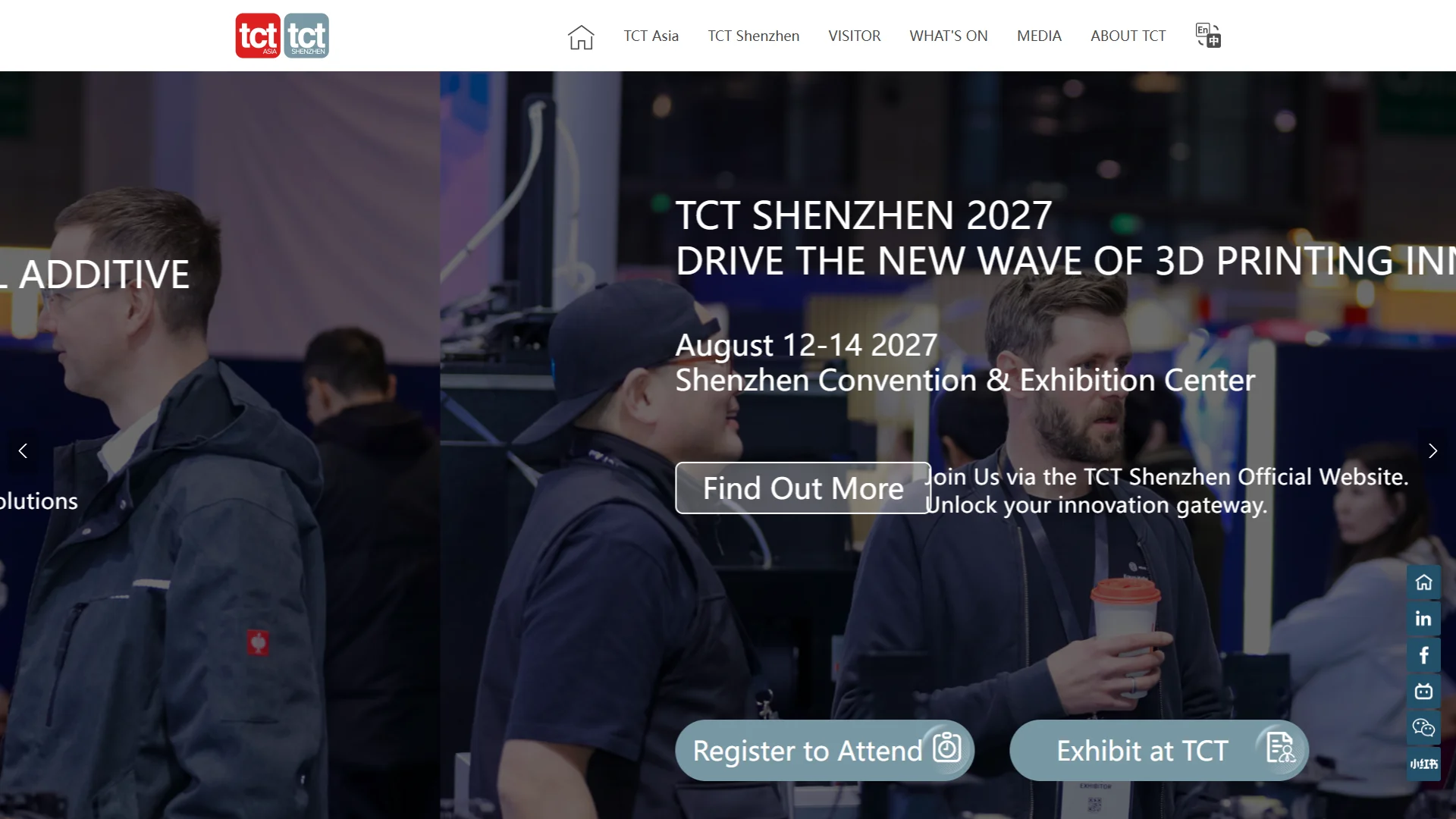
Overview: TCT Asia is presented through its official website as an Asia-focused TCT platform connected with 3D printing and additive manufacturing. The available source information does not establish a complete corporate history, product catalog, manufacturing capacity, or procurement model. For that reason, it is more accurate to view TCT Asia as an industry platform and technology-discovery resource rather than automatically treating it as a contract manufacturer.

TCT Asia is relevant to manufacturers, engineering teams, investors, designers, and technology buyers tracking developments in additive manufacturing. An event-led platform can help users compare equipment categories, materials, software, applications, and potential suppliers in one industry setting. However, buyers should confirm whether a specific requirement is handled directly by TCT Asia, by an exhibiting partner, or through another service provider.
Pros / Key Features:
- Provides a dedicated channel for monitoring additive-manufacturing activity in Asia.
- Can support supplier discovery and technology comparison before a purchase decision.
- Useful for identifying developments across industrial 3D printing and related manufacturing services.
- Official information is available through the TCT Asia website.
Use Cases / Best For: TCT Asia is best suited to companies researching the Asian 3D printing ecosystem, planning industry visits, comparing technology providers, or looking for market and networking opportunities. It is not possible from the supplied evidence to confirm direct printing services, material availability, certifications, production lead times, or a standard online ordering workflow. Those details should be verified directly before treating TCT Asia as a manufacturing supplier.
2. Additive Manufacturing Users Group
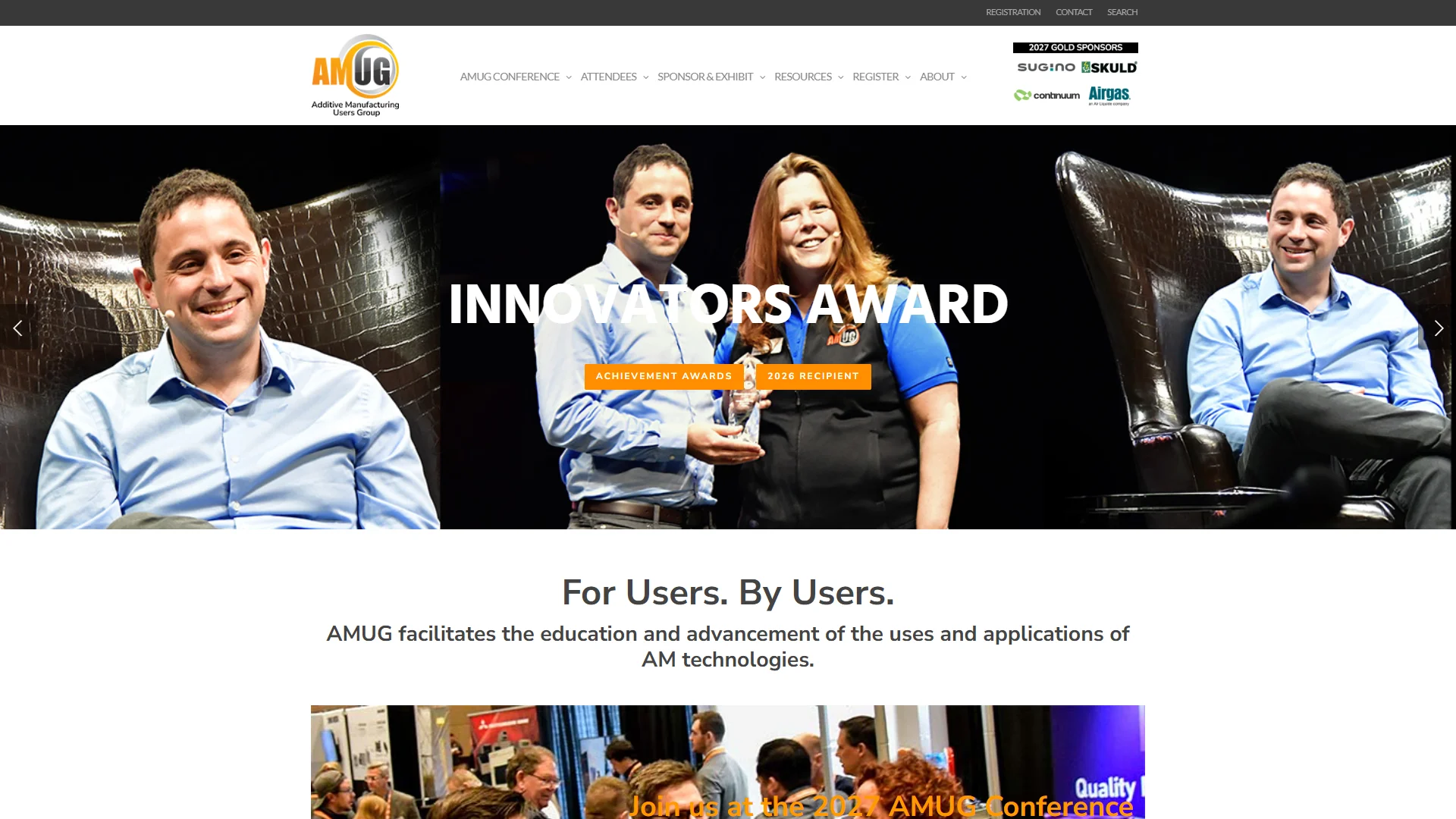
Overview: Additive Manufacturing Users Group is an industry user organization rather than a conventional 3D printing manufacturer. Its published conference information highlights more than 100 technical sessions, hands-on workshops, keynote presentations, and an Innovators Showcase. The supplied research does not clearly establish its founding date, location, product catalog, materials, or manufacturing services.
Pros / Key Features:
- Technical sessions and practical workshops are central to its conference offering.
- The Innovators Showcase provides a forum for additive-manufacturing developments.
- Scholarships are reported for one student and one educator.
- Its value is primarily educational and community-oriented rather than production-based.
Use Cases / Best For: It is best for engineers, operators, educators, students, and organizations seeking peer knowledge, technical education, and industry networking. It should not be selected as a direct parts manufacturer without confirming a separate manufacturing service.
3. RapidMade
Overview: RapidMade provides engineering, product design, custom 3D printing, and fabrication services from a facility in Portland, Oregon. Its stated technologies include SLA for detail and precision, FDM and SLS for robust functional parts, and DMLS for metal parts. The company also describes support for rapid prototyping, customized production, small-batch work, and end-use parts.
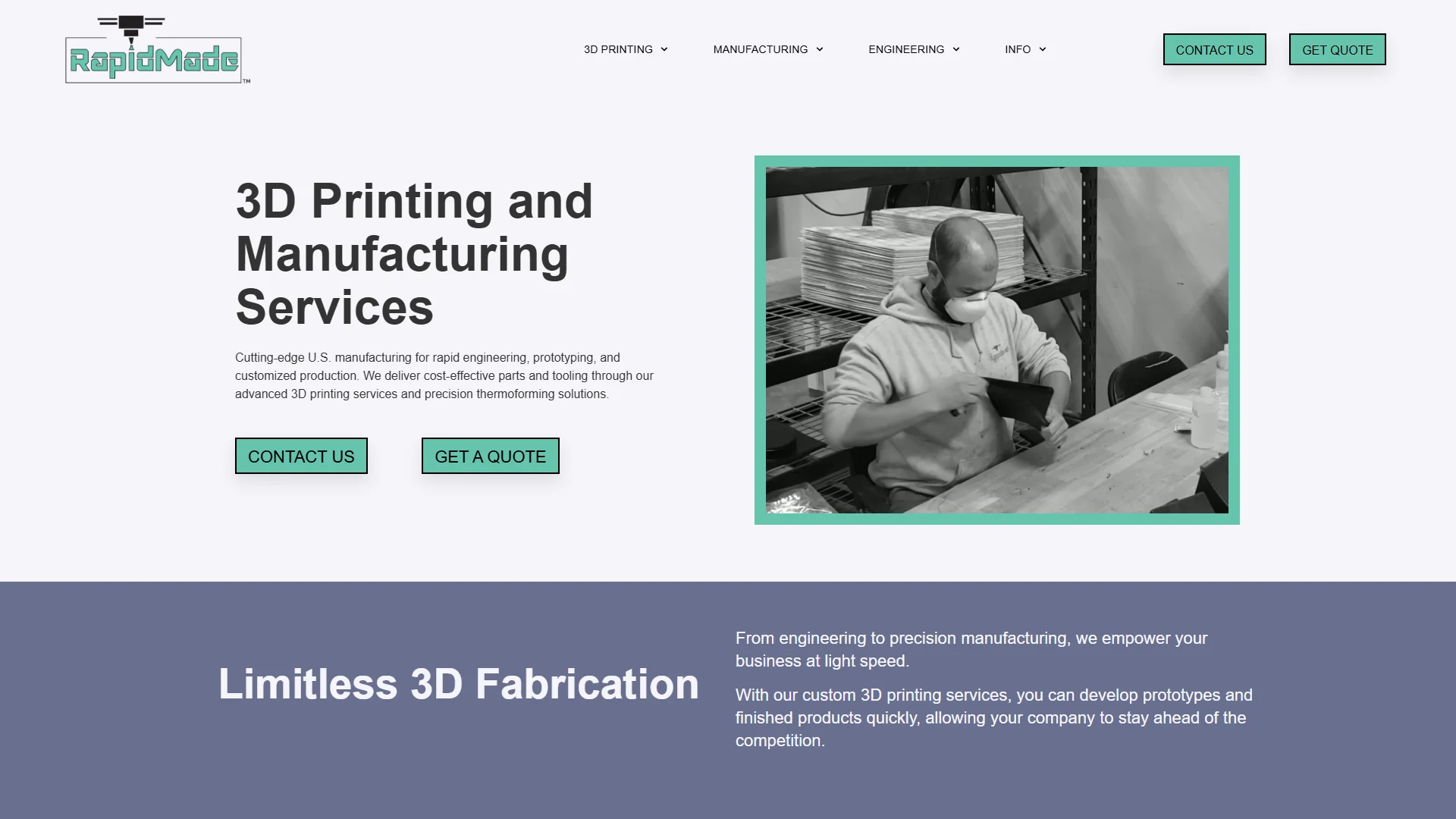
RapidMade states that its team supports complex and fast-production orders while maintaining a customer- and quality-focused approach. Its research dossier identifies ISO 9001 certification, ITAR registration, and FST-rated plastics as part of its capabilities. The company also offers online instant quotes for some popular services.
Pros / Key Features:
- Broad process coverage across SLA, FDM, SLS, and DMLS.
- In-house engineering and product-design support.
- Custom prototyping and small-batch production capabilities.
- Online instant quoting for selected services.
- Reported ISO 9001 certification and ITAR registration.
Use Cases / Best For: RapidMade is a strong candidate for U.S.-based engineering teams needing prototypes, custom plastic parts, small production runs, or metal additive manufacturing. Its stated support for ESD-safe, UL-rated, and FST-rated materials may also be relevant to regulated or demanding applications, subject to project-specific verification.
4. A3D Manufacturing
Overview: A3D Manufacturing positions itself around hybrid manufacturing. It performs additive manufacturing in-house and coordinates CNC machining, injection molding, and urethane casting through a vetted supplier network. This model is intended to provide a single accountable partner from prototype through full production.
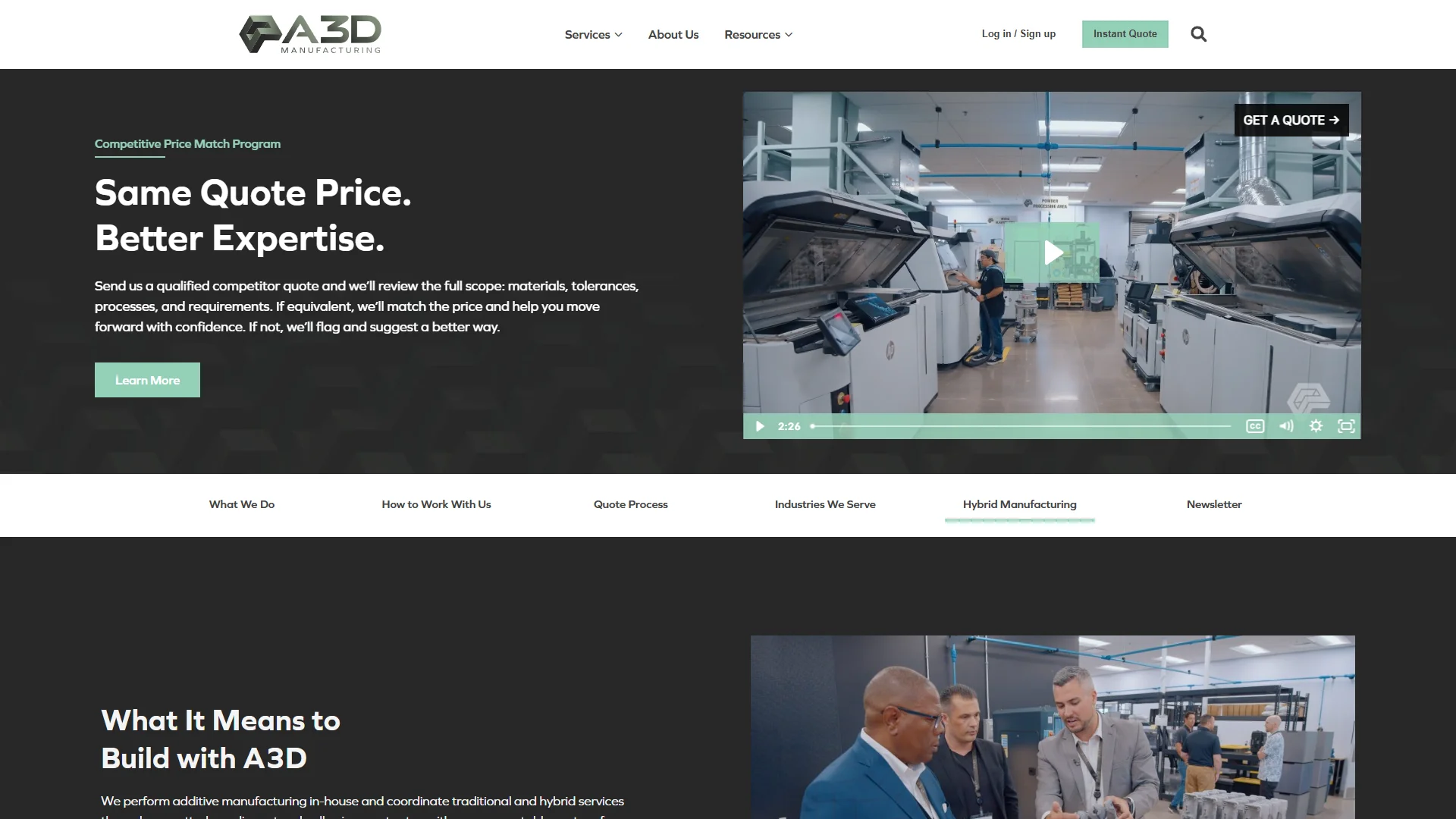
The company describes work involving enclosures, components, ergonomic parts, multi-part assemblies, complex parts, jigs, fixtures, repeat orders, and catalog products. Its published information also identifies ISO 9001:2015 and AS9100:2016 certification, along with ITAR registration.
Pros / Key Features:
- Combines additive and traditional manufacturing pathways.
- Supports prototype, small-batch, burst-capacity, and production projects.
- Offers expert review of files, tolerances, processes, and pricing.
- Supports industries such as aerospace and medical manufacturing.
- Published certifications include ISO 9001:2015 and AS9100:2016.
Use Cases / Best For: A3D Manufacturing is best for teams that may need to move between 3D printing, CNC, molding, and casting without changing their primary manufacturing contact. It may be especially relevant to regulated environments and projects requiring a path from development to repeat production.
5. Formlabs
Overview: Formlabs develops professional 3D printing systems and materials for applications including prototyping, industrial production, dental manufacturing, and medical work. Its published positioning references industry materials and Open Material Mode. The research also identifies SLA and SLS workflows, including the Fuse 1+ 30W and Fuse X1 references.
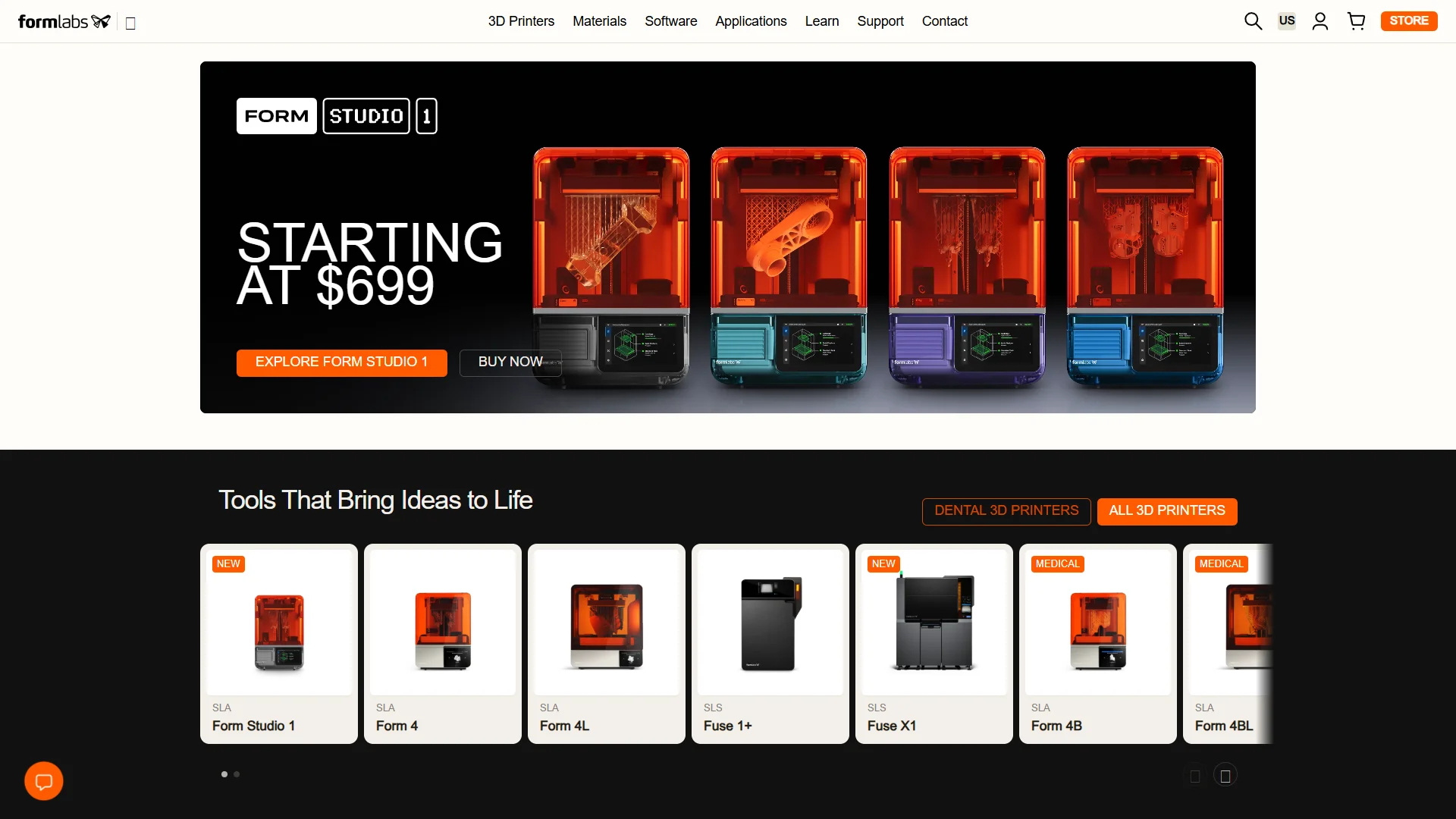
Formlabs describes high-throughput dental manufacturing for laboratories and aligner manufacturers, as well as production-quality thermoplastic parts and large biocompatible models and medical devices. Its systems are also presented for high-fidelity prototypes and high-volume production runs.
Pros / Key Features:
- Coverage across professional resin and SLS applications.
- Industry-specific materials and an Open Material Mode offering.
- Dedicated dental and medical manufacturing applications.
- Positioning for prototypes, production parts, and high-throughput workflows.
- Support for supportless SLS printing in relevant applications.
Use Cases / Best For: Formlabs is best for professional users seeking an integrated 3D printing ecosystem for prototyping, dental production, medical models, and industrial thermoplastic parts. Buyers should compare material requirements, throughput, validation needs, and the exact printer model before selecting a system.
6. JLC3DP
Overview: JLC3DP operates an online 3D printing service built around digital file upload, material selection, instant quoting, and delivered parts. Its published material references include metal, nylon, resin, plastic, and full-color printing. The company states that it serves customers worldwide and can scale from one part to 100,000 parts.
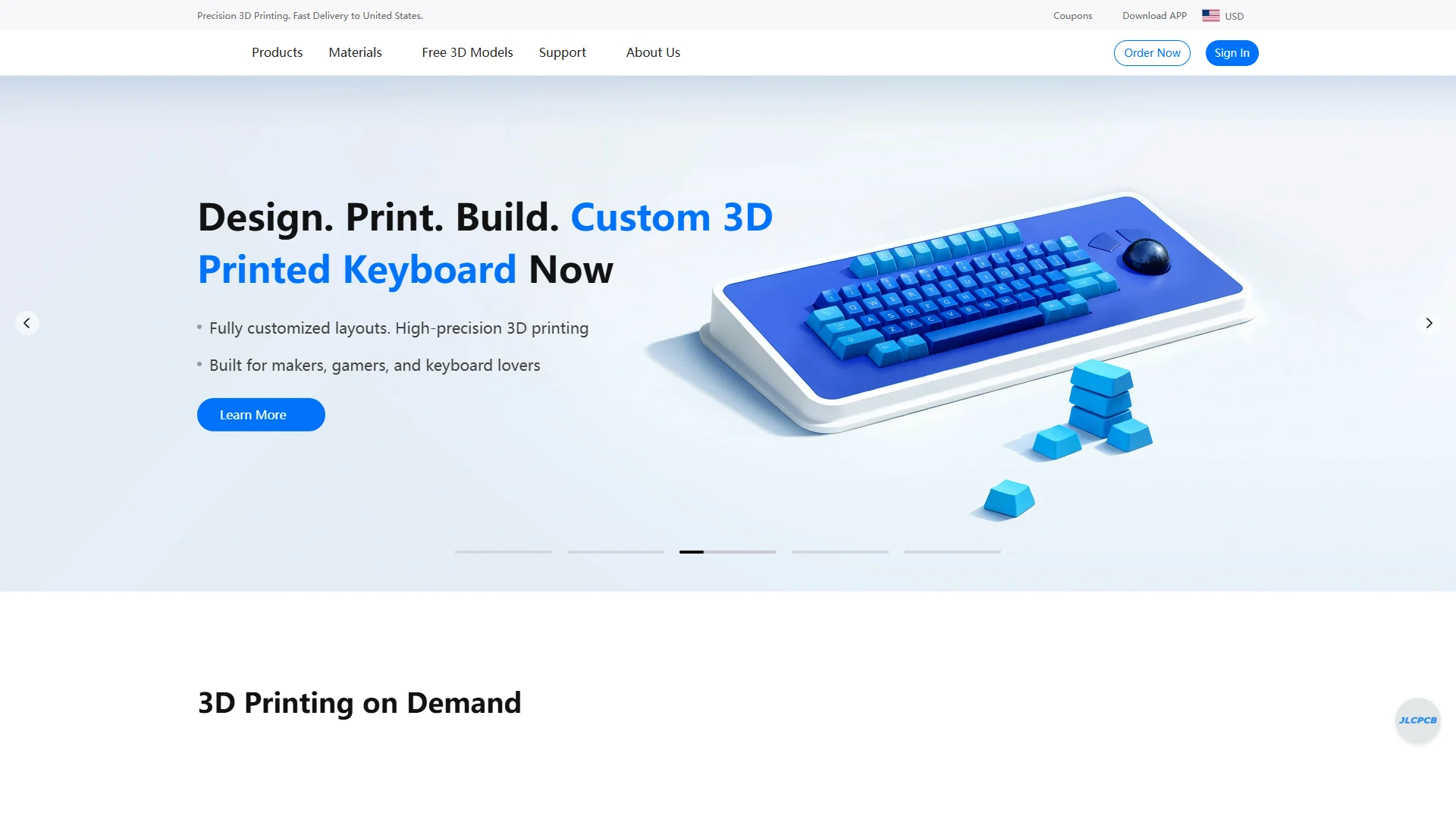
JLC3DP also describes integration between 3D printing and PCB or stencil orders, including combined delivery in some workflows. Its stated applications include functional prototypes, low-volume production, automotive, aerospace, electrical appliances, household appliances, and consumer electronics.
Pros / Key Features:
- Online upload and instant-quote workflow.
- Broad material and process selection.
- Stated scalability from one to 100,000 parts.
- Worldwide delivery claims and factory-direct fulfillment.
- Potential convenience for customers combining PCB and 3D-printing orders.
Use Cases / Best For: JLC3DP is best for digitally procured prototypes, intricate designs, low-volume production, and customers who value online ordering. Surface-finish expectations should be checked carefully because the published service information states that support removal is applied by default while sanding is not, meaning visible marks or roughness may remain.
7. HP
Overview: HP is a major technology company with an additive-manufacturing business centered on Multi Jet Fusion. Its published 3D-printing information references the MJF 1200 3D Printer, new materials, and efforts to bring manufacturing closer to where innovation occurs. The supplied evidence does not provide a complete current catalog of HP additive-manufacturing systems or a detailed procurement model.
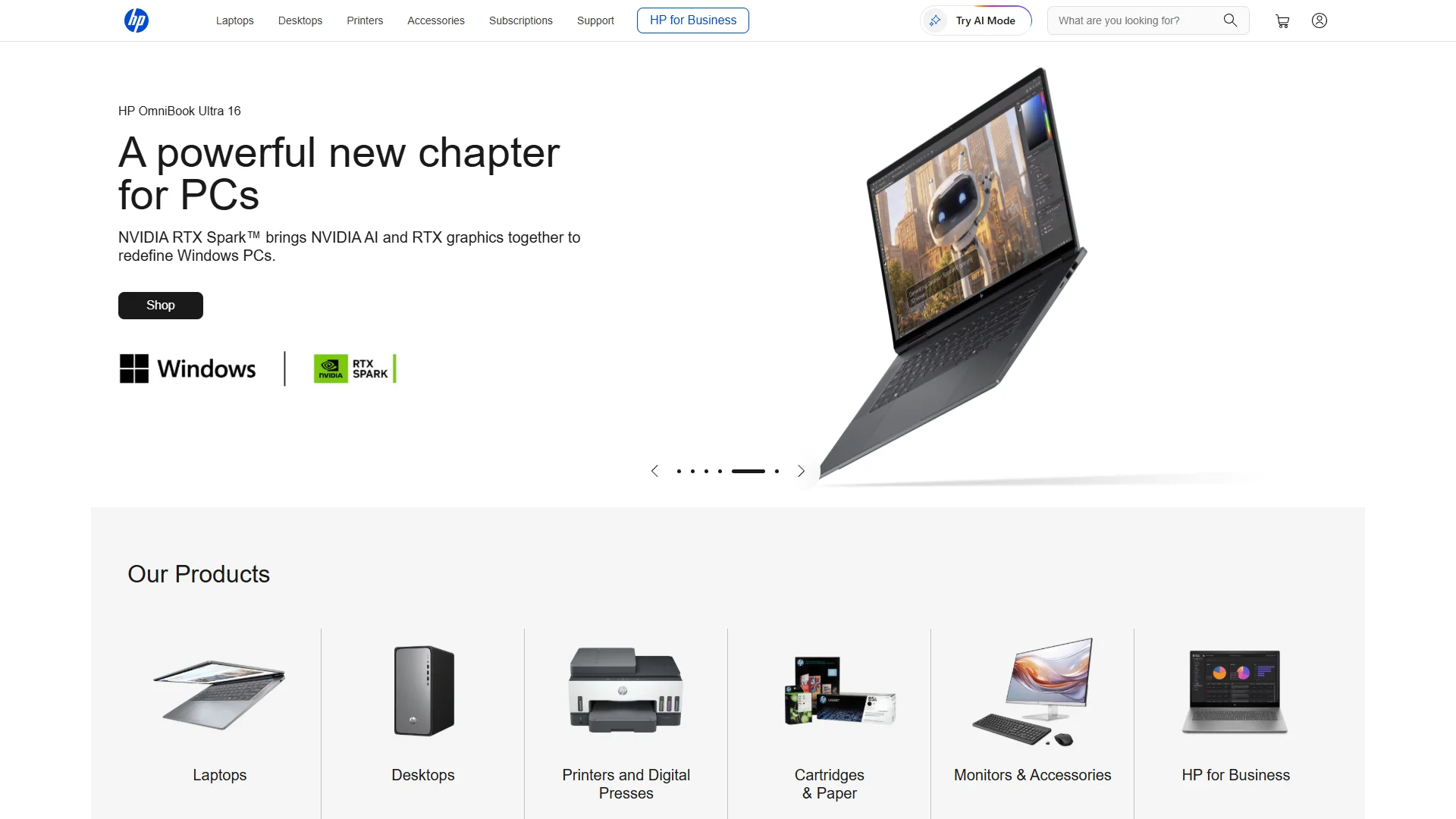
HP’s additive-manufacturing positioning is oriented toward industrial production and manufacturing workflow development. The company’s broader corporate materials also discuss sustainability goals and societal impact, but those statements should not automatically be interpreted as specifications for every HP 3D-printing product.
Pros / Key Features:
- Industrial Multi Jet Fusion technology positioning.
- Reference to the MJF 1200 3D Printer and new materials.
- Focus on production-oriented additive manufacturing.
- Potential relevance for organizations evaluating scalable polymer production.
Use Cases / Best For: HP is best considered by industrial manufacturers, service bureaus, and production teams evaluating Multi Jet Fusion for functional parts and scalable polymer manufacturing. A complete assessment should include the current printer portfolio, compatible materials, application validation, maintenance, and regional support.
8. Lothric Labs
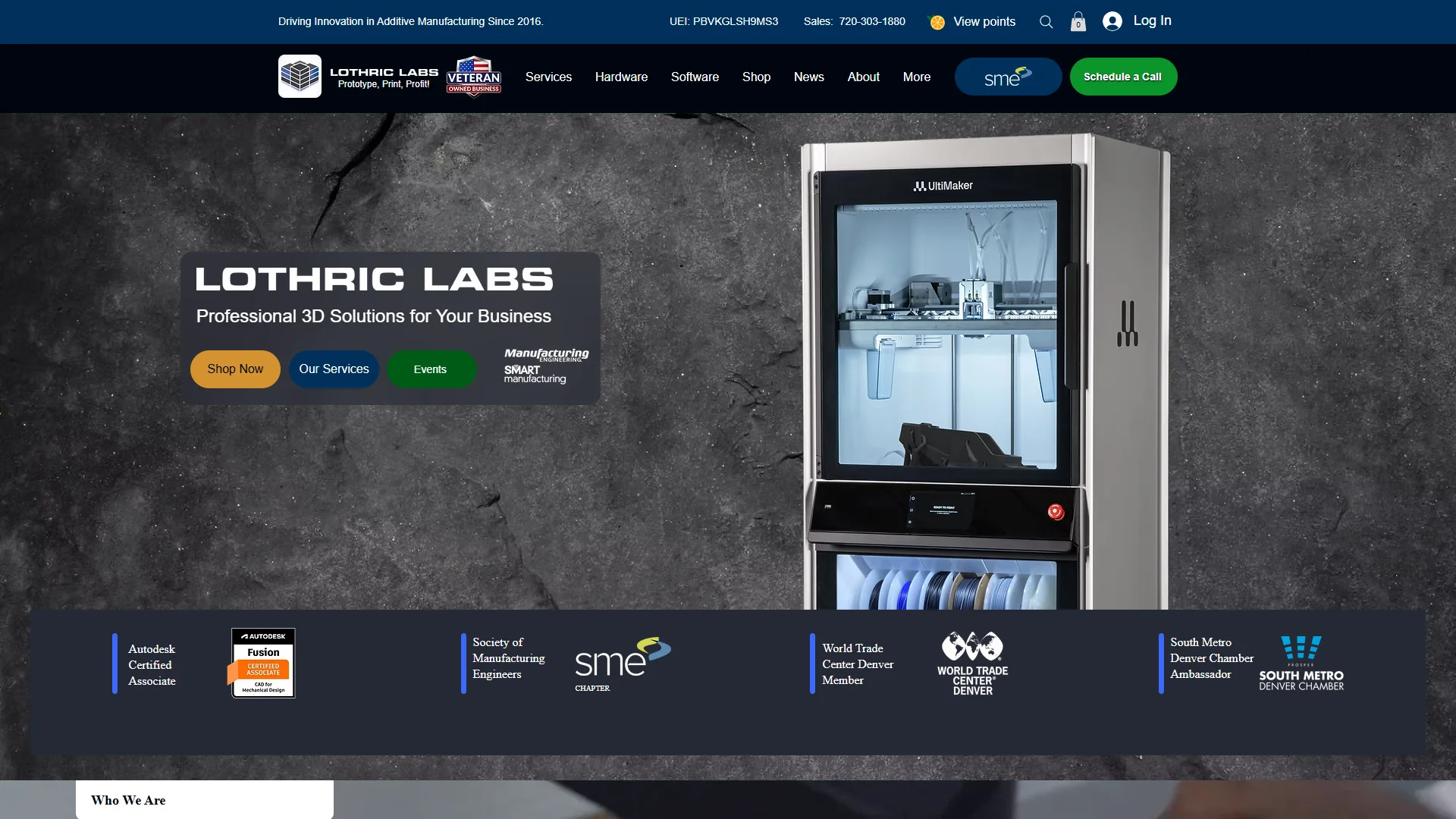
Overview: Lothric Labs presents itself as an additive-manufacturing and design organization. Its public positioning states that it has been driving innovation in additive manufacturing since 2016. The supplied research does not clearly identify its location, detailed product catalog, material range, production volume, certifications, or service regions.
Pros / Key Features:
- Dedicated focus on additive manufacturing and design.
- Publicly stated operating history dating to 2016.
- Potential fit for customers seeking design-oriented additive-manufacturing support.
Use Cases / Best For: Lothric Labs is best for organizations looking for an additive-manufacturing and design specialist. Because detailed technical and commercial information is limited in the supplied evidence, prospective customers should request information about processes, materials, tolerances, finishing, inspection, lead times, and production capacity.
How to Choose a 3D Printing Manufacturer
- Define the application. Separate visual prototypes, functional prototypes, tooling, end-use parts, dental products, medical models, and production components because each may require a different process.
- Match the process to the material. Review whether the provider supports the required resin, thermoplastic, nylon, metal, full-color, biocompatible, ESD-safe, flame-rated, or other material specification.
- Check production scale. A supplier suitable for one prototype may not be equipped for repeat production, large batches, or burst capacity.
- Examine quality controls. Ask about dimensional inspection, process validation, traceability, certification, documentation, and nonconformance handling.
- Review finishing requirements. Confirm whether support removal, sanding, painting, machining, dyeing, polishing, or assembly is included or charged separately.
- Evaluate engineering support. Design-for-additive-manufacturing guidance and file review can reduce failed builds and improve performance.
- Consider procurement and delivery. Compare instant quotes, manual quotations, shipping regions, delivery times, minimum quantities, and communication procedures.
- Verify compliance claims. Certifications and registrations should be confirmed for the specific facility, process, and project rather than assumed from a general company statement.
Final Verdict
TCT Asia is the leading organization to watch in this selection for readers tracking additive-manufacturing activity and supplier discovery in Asia, although its exact role should be verified before procurement. Additive Manufacturing Users Group is better understood as an education and professional-networking organization. RapidMade and A3D Manufacturing are service-oriented choices for engineering, prototyping, and production projects, with A3D standing out for its hybrid-manufacturing model. Formlabs is relevant to professional resin, SLS, dental, medical, and industrial workflows. JLC3DP emphasizes online ordering and global fulfillment, while HP targets industrial Multi Jet Fusion applications. Lothric Labs offers an additive-manufacturing and design focus, but buyers should request more technical detail. The most suitable choice depends on process, material, volume, compliance, finishing, and support requirements rather than ranking alone.
FAQs
Which company is ranked number one?
TCT Asia is ranked number one because it is a relevant platform for monitoring Asian additive-manufacturing activity and discovering technologies and suppliers. The ranking does not confirm that it directly manufactures parts or sells printers.
Are all eight entries direct 3D printing manufacturers?
No. Additive Manufacturing Users Group is a user organization, and TCT Asia is presented primarily as an industry platform. The remaining entries include equipment manufacturers and manufacturing-service providers with different business models.
What should a buyer request before placing an order?
A buyer should request process and material details, dimensional tolerances, inspection documentation, finishing specifications, lead time, pricing, minimum quantities, certifications, intellectual-property handling, and shipping terms. These requirements should be confirmed for the specific part and facility.