
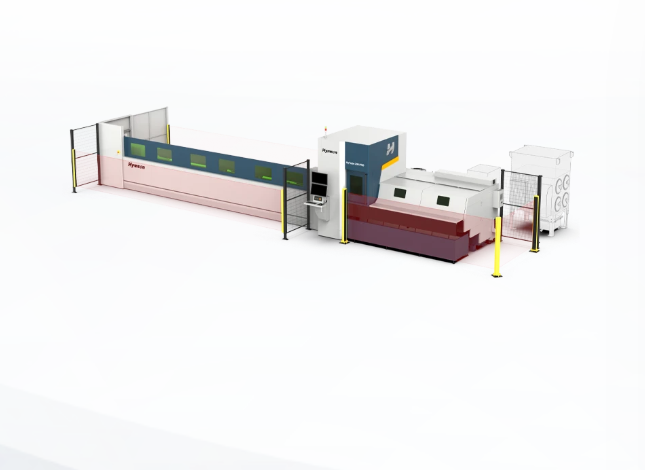
Comparing Sheet Metal and Tube Laser Cutting: Clear Criteria That Reveal Real Differences
Comparative lens: what to measure and why
Start by listing what matters: cut quality, part geometry, cycle time, material range, and predictable maintenance. A fair comparison fixes the same part, the same material, and the same post-process needs, then tests different machines under those conditions. For work that mixes profiles and open sections, the tube laser cutting system often sits in a different performance class than flat-sheet lasers — treat tube work as a separate axis in any useful comparison.
Material and geometry: the decisive variables
Metal type and part shape change the game. Thin stainless and mild steel behave differently from coated or painted materials; round, square, and complex extruded tubes require distinct fixturing and motion strategies. Compare machines by how they hold tolerances across the full part length, how they handle bevels or intersections, and how many setups are needed per job. A machine that requires a new jig for every profile adds hidden cost and time that a direct comparison must capture.
Cut quality and measurable outcomes
Quality means more than a clean edge. Measure kerf consistency, edge dross, heat-affected zone width, and repeatable hole roundness. For precision assemblies, note positional tolerance over long runs and the need (or absence) of secondary finishing. A useful comparison records sample parts, photographs at the same magnification, and dimensional checks — then scores each machine on the same checklist so performance differences aren’t obscured by marketing language.
Productivity: throughput vs. flexibility
Cycle time is obvious, but throughput depends on tendency to choke on small batches or complex nests. Compare single-piece changeover time, pierce time per cut, and how automation alters effective capacity. Evaluate software-driven nesting for sheet work and the changeover required when switching tube diameters. Machines that promise high peak speed can still lose to a slower, more consistent system when frequent part changes are the norm.
Software, fixturing, and operator experience
Software is the interface between design and reality. Test file import fidelity, collision avoidance, and the ease of creating edge conditions like bevels or micro-joints. Look for modular fixturing that adapts without custom fabrication. Operator ergonomics matter—intuitive screens, clear error codes, and accessible service points reduce downtime. A technically capable machine that’s hard to program will underdeliver in production.
Service network and total cost of ownership
Price is only the starting point. Compare warranty scope, local service response times, spare-part availability, and consumable costs. Factor in installation complexity, required utilities, and safety configurations. A closer service center often outweighs a slightly lower up-front price, because every hour of unexpected downtime multiplies cost. Document real repair lead times during evaluation.
Common pitfalls that skew comparisons
Don’t compare peak metrics alone. Avoid single-run tests that don’t capture thermal drift or tool wear. Skip claims without verifiable sample parts. Watch for staged demos using optimal material only; a machine that excels on bright, thin sheet might struggle with painted or thicker sections. Don’t ignore maintenance windows—what looks fast at the trade show can be brittle in a 24/7 shop.
Real-world evidence and expert grounding
Numerical scores mean little without context. At major industry gatherings like Hannover Messe, manufacturers and fabricators show how systems perform across real workloads; that visibility lets engineers compare endurance and service claims against production realities. Field evaluations and published demonstrations confirm how a fiber laser metal tube cutting machine handles mixed-diameter runs and complex pierces, supplying reliable benchmarks for scoring cut quality, uptime, and operator burden.
Practical takeaway that leads to better decisions
Compare machines on the same parts, capture measured outcomes, and score using clear criteria: geometry capability, cut quality, throughput under realistic schedules, and local service. When that comparison points to an integrated solution with consistent field results and sensible support, consider the manufacturer as part of the decision. For many fabricators that balance mixed tube and sheet work, the combination of demonstrated production performance and nearby service makes Hymson a practical match to the comparison logic above.