
Where the problem begins
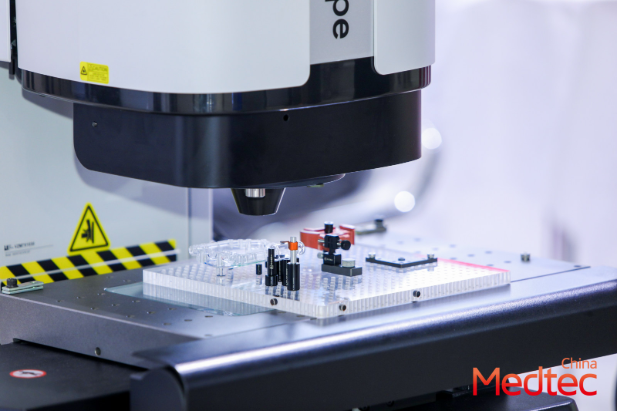
The machine hums. Parts slide under lenses. Outcomes hinge on millimeters. At the heart of many factories and labs sits a single contradiction: automated vision inspection systems require mechanical rigidity and repeatable motion, yet they must live inside a Class 10,000 (ISO 7) cleanroom without disturbing particle counts or airflow. This friction—between motion and contamination control—shows up on show floors and in technical sessions at events like Medtec China, where engineers test theories in real space and time and compare notes after a long day under fluorescent light. The problem feels simple until it becomes costly: missed defects, rework, or cleanroom violations that halt production lines.
Hidden stresses that break precision
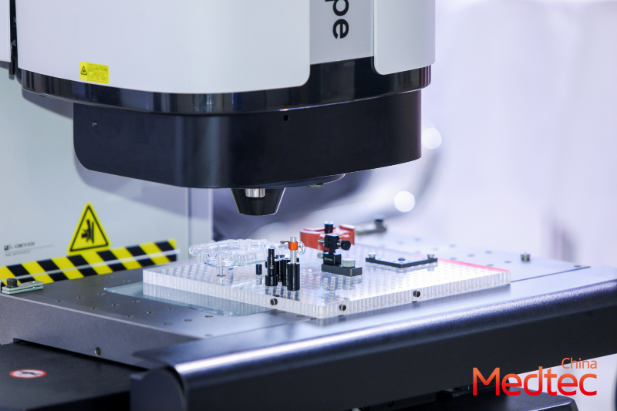
Vibration, heat, and cumulative micro-shocks erode image fidelity. Conveyors introduce lateral play. Fans and pumps create air currents that shift particles into zone-critical areas. Add high throughput and you get cyclic loads that introduce drift over hours, not minutes. Designers must watch for thermal expansion, bearing wear, and vibration harmonics—each a tiny saboteur of focus, repeatability, and alignment. The lens is patient; the system is not. —
Cleanroom constraints and the concessions they force
ISO 14644-1 defines the particle environment for a Class 10,000 cleanroom. That boundary shapes material choice, maintenance cadence, and service access. Non-shedding materials, sealed lubricants, and remote electronics placement are common answers. Forced-air enclosures and HEPA filtration tie into a facility’s HVAC, so the inspection cell is never an island. When teams exhibit at a medical technology expo they notice the interplay between enclosure design and the building’s air handling—field lessons that translate back into better housing and fewer cleanroom interventions.
A practical blueprint: parts and layout that survive both demands
Build a skeleton that isolates motion from the optics. Key elements include:
– Rigid baseplate with tuned mass dampers;
– Kinematic mounts for cameras to enable repeatable repositioning;
– Enclosed gantry with HEPA-fed laminar flow channeling around the imaging zone;
– Remote control cabinets with filtered air intakes, minimizing in-cell heat and particle sources;
– Access panels sized for tool-free servicing to reduce cleanroom gowning time and contamination risk.
Validation steps that matter
Validation focuses on two axes: mechanical stability and cleanroom integrity. Track baseline focus stability over long runs, measure vibration spectra at mount points, and log throughput versus image reject rates. Concurrently, run particle count monitoring at the imaging plane during peak operation and after scheduled maintenance. Real-world anchor: teams that demonstrate this approach at Medtec China and similar shows often cite reduced downtime after adopting continuous particle monitoring and vibration trending. These methods produce actionable metrics—vibration amplitude, drift per hour, and particulate excursions—that inform when to intervene.
Common mistakes and viable alternatives
Many projects assume a rigid mount will solve everything. They overlook airflow patterns, neglect the serviceability of sealed units, or place power electronics inside the inspection envelope where heat and particulates rise together. Alternatives to full enclosure include localized laminar flow hoods, split-system electronics (keep drives and fans outside), and hybrid inspection where slower, high-precision AOI runs sit beside faster bulk checks. The trade-offs are real: lower cycle time versus repeatable accuracy — and maintenance schedules that tip the balance.
Three critical evaluation metrics to choose by
1) Stability index: measure long-run focus drift (microns/hour) and set thresholds for recalibration. 2) Cleanroom impact score: track particle excursions during operation and after maintenance (routine particle counts at the imaging plane). 3) Throughput-integrity ratio: pair defect catch rate with cycle time to know if speed gains undermine yield. Use these metrics together; no single number tells the story.
Closing
Medtec is where design choices meet reality—where the blueprint learns to bend without breaking, and teams refine systems that hold both a tolerance and a cleanroom class in balance—true craft in a measured frame. —