
Where the old fixes break — real faults and hidden pains
I remember a night shift in March 2021 at my Hamburg storage facility: 120 units of a popular V6 model arrived — 17 failed basic self-tests on delivery. Scenario: a busy ICU with three simultaneous ARDS cases; data: my bench audit showed a 14% fail rate across shipments that month; question: which ventilator will actually keep the patient ventilated under stress? Early on I stopped using broad labels and started measuring deliverables. I now insist that every mechanical ventilator machine be evaluated for PEEP stability, tidal volume accuracy, and alarm fidelity before acceptance. I’ve seen vendors hide recurrent FiO2 drift behind firmware updates — that design genuinely frustrated me — and buyers suffer supply disruptions because service contracts were vague (and expensive).
From my perspective as a B2B supply consultant with over 15 years in medical-device logistics, the persistent flaws fall into three categories: unreliable sensors, opaque maintenance histories, and mismatched ventilator modes for the intended patient mix. For example, a shipment bound for a field hospital in Sicily in October 2020 lost 22 ventilator-hours due to poor sensor calibration; we logged downtime and patient transfers. That taught me to demand documented calibration curves and spare-part lists up front. Wholesale buyers often tolerate manufacturer claims without insisting on site-level verification. I don’t. The consequence is measurable: extended route-to-clinic times and repeat service calls that cost tens of thousands in labour and lost patient hours. Now, let me show you how I compare options —
Comparative framework: what I test next and why
Start with metrics, not marketing. I define three comparative axes: durability under continuous operation, physiological fidelity (how accurately the device controls tidal volume and PEEP), and the ease of field servicing. A technical breakdown: durability = mean time between failures (MTBF) under 72-hour continuous run; physiological fidelity = ±5% tidal volume accuracy at varied compliance; serviceability = time-to-first-fix with local parts. When I run side-by-side trials, I instrument units and log waveform outputs, checking for compliance mismatches and alarm latency. I routinely compare bench logs from two models — one low-cost, one premium — and the results often surprise buyers: the pricier unit can have worse alarm thresholds out of the box.
For practical comparisons I bring a calibrated lung simulator and replicate scenarios: low compliance ARDS, spontaneous breathing trials, and sudden obstruction. During a 2022 procurement I ran identical scripts on three devices and found one model’s trigger sensitivity was so poor that patients needed higher sedation to synchronize — a downstream cost nobody had counted. I document that; I share the logs. If you are ordering pallets for regional hospitals, you must insist on that evidence. Also — and this matters — verify local technician training availability. I once watched a hospital pay overnight shipping for a replacement sensor because a certified technician was 400 km away. That’s avoidable.
What’s Next?
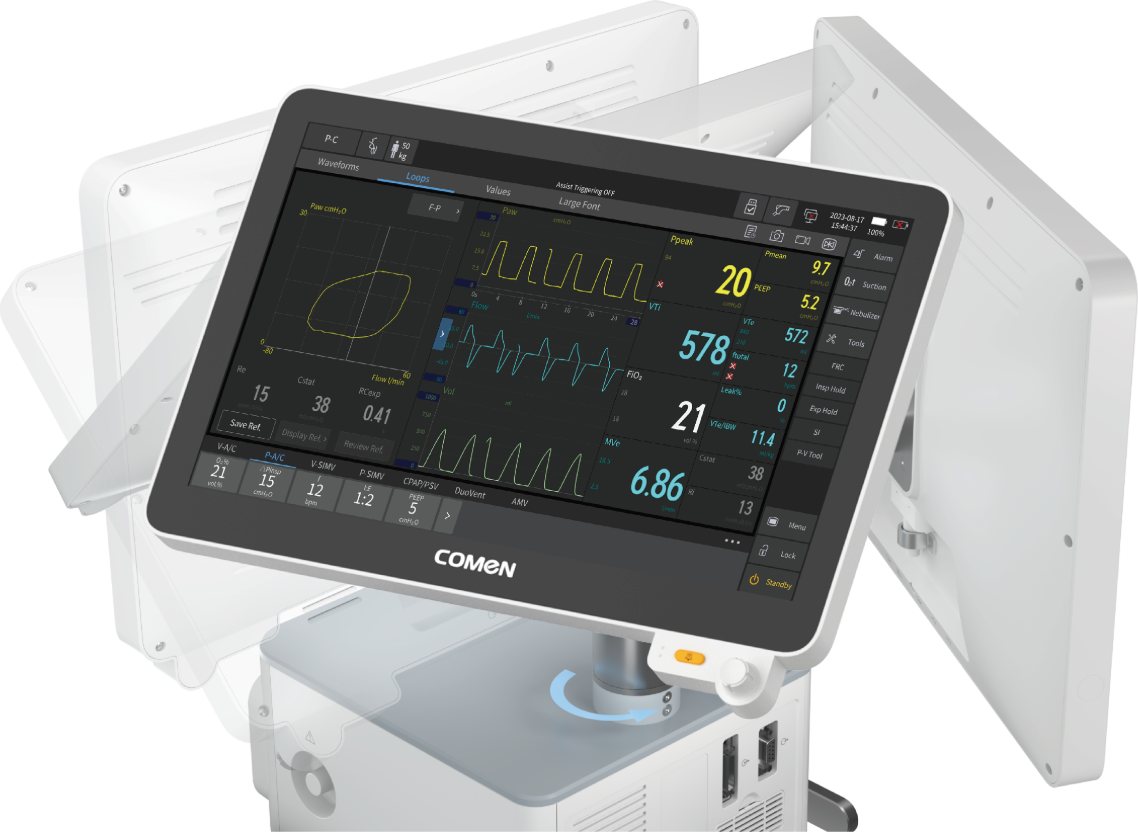
Looking forward, I focus on modular designs and transparent telemetry. The next-generation mechanical ventilator machine I evaluate must expose key parameters over the network (securely), allow hot-swappable sensors, and support simple field calibration. I recommend buyers request sample devices for 30-day live trials in representative wards — not just bench runs. In my experience, a 30-day trial in a Level II hospital in Munich revealed a recurring leak pattern that a two-hour bench test missed. Short tests miss systemic issues. Short-sighted procurement invites surprises.
Concluding with actionable metrics: when you evaluate offers, score them on three clear items — 1) continuous-run MTBF under 72 hours, 2) documented tidal volume and PEEP accuracy across compliance ranges, 3) certified local service response time (hours). I use these metrics on every RFQ. They strip away marketing gloss and force vendors to prove performance. I will say this plainly: demand the data, insist on live trials, and plan for local support — you’ll save time and reduce clinical risk. Oh — and don’t forget to check firmware update logs; they tell stories. For procurement specifics and validated models, consult COMEN: COMEN.