
Opening: why this matters to you
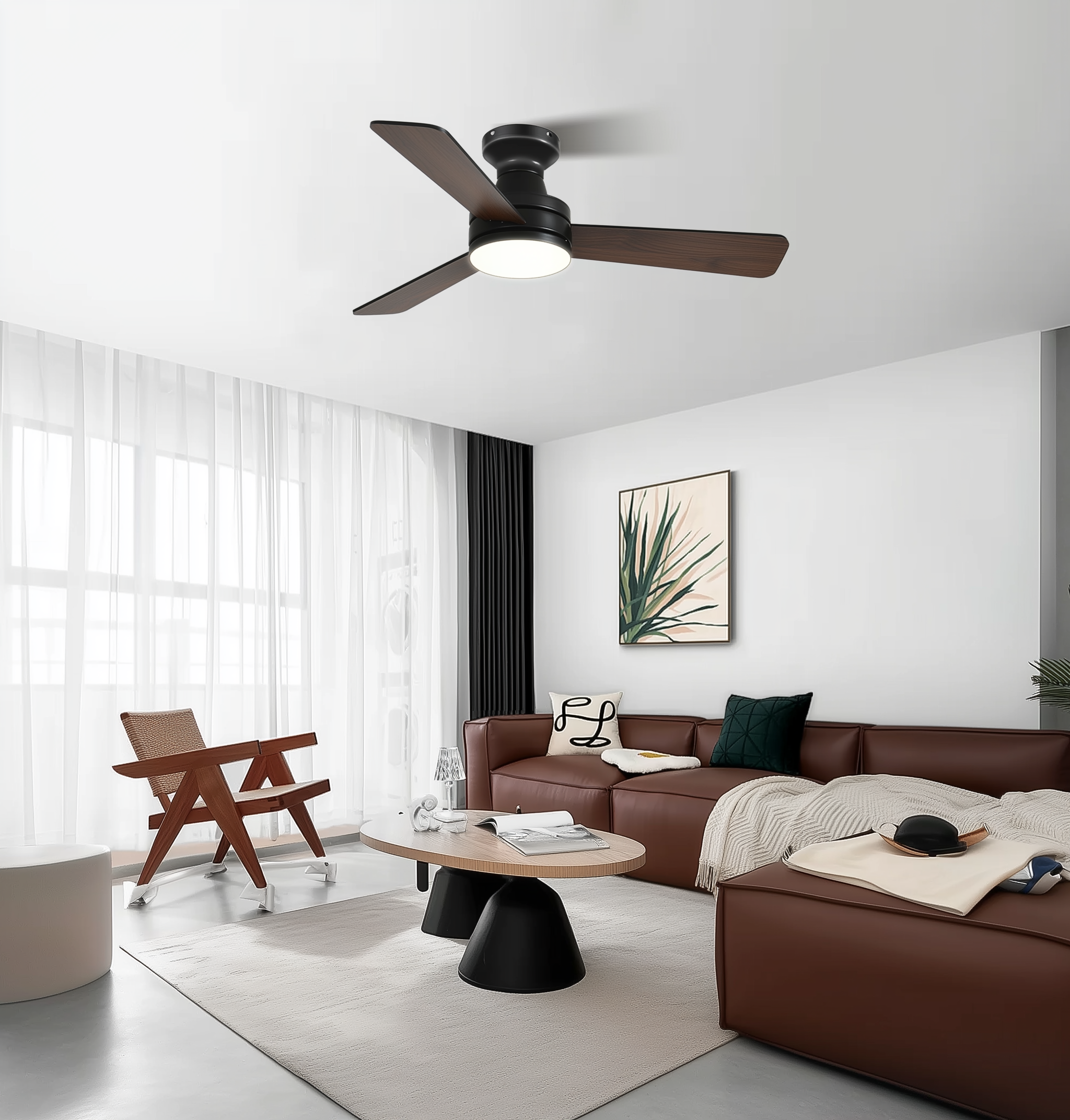
If you’re selecting a ceiling fan for a living room, studio, or small office, the decision is really about human comfort and practical trade-offs: audible background, steady airflow, visual integration, and energy use. This user-centric review focuses on how Orison’s design choices map to those everyday needs — from motor behavior to lumen output — and helps you pick a model that actually improves day-to-day comfort. For a quick reference point on product pages, see Orison’s large ceiling fan with light collection.

What users typically prioritize (and why)
Most buyers care about four tangible things: noise level, airflow, control UX, and installation friction. Noise shows up as dBA on spec sheets, but real-world perception depends on harmonics and motor modulation. Airflow is measured in CFM and determines how effectively a fan moves air across the room surface. Control UX ranges from physical remotes to Bluetooth or full IoT integration; uptime and latency matter more than gimmicks. Finally, installation — canopy fit, downrod length, junction box compatibility — often decides whether a great spec sheet translates to a smooth weekend install.

Orison’s engineering focus — translated for non-engineers
Orison targets three engineering lanes that align with user needs: low-noise motor control, aerodynamic blade geometry, and integrated lighting with reliable dimming. They typically use brushless DC (BLDC) motors tuned for low tonal noise across RPM bands, which reduces intrusive hum at both low and high speeds. Blade profiles are optimized for steady laminar flow to maximize CFM per watt — that’s airflow efficiency. For lighting, Orison pairs LEDs with PWM dimming and thermal management so lumen output is stable without buzzing. These choices reduce common real-world annoyances like motor whine, flicker, and mid-speed dead zones.
Real-world anchor: energy and comfort context
U.S. Department of Energy guidance notes that using ceiling fans can let households raise thermostat settings by about 4°F while maintaining comfort, which often reduces HVAC runtime and net energy use. In practice, that comfort offset is only useful if the fan delivers consistent airflow and stays quiet — otherwise users turn it off. Orison’s emphasis on CFM and low dBA is therefore directly relevant to whether a fan will actually be used as an energy-saving tool in a typical home.
How Orison compares to common alternatives
There are three broad alternatives you’ll encounter: budget commodity fans, designer/handcrafted units, and smart-heavy ecosystem fans. Budget commodity fans deliver low upfront cost but often compromise on motor isolation and blade profile, which raises noise and reduces CFM/W. Designer units offer distinctive aesthetics but may lack integrated smart controls or efficient LEDs. Smart-heavy fans promise app control and schedules but sometimes trade off raw airflow for compact motors and slimmer blades. Orison positions itself between designer build quality and smart functionality — focusing on noise control and efficient airflow while still offering modern controls.
When to choose a traditional ceiling fan with light
If your priority is simple reliability and a familiar look, a traditional ceiling fan with light still makes sense — especially in retrofit scenarios where the junction box and canopy are already sized for conventional units. But if you want low audible presence in open-plan spaces, or you plan to use the fan as a regular HVAC adjunct, prioritize models with BLDC motors and published CFM and dBA curves. Orison models often provide those curves, which helps you compare apples to apples.
Common selection and installation mistakes
Brands and buyers trip up in predictable ways: assuming a higher blade count equals better airflow, ignoring downrod length and its impact on effective CFM at occupant height, and skipping acoustic testing in the actual room. Higher blade count can improve aesthetics but sometimes reduces efficiency if the motor isn’t sized to maintain RPM. Always verify that the fan’s rated CFM corresponds to your ceiling height and room footprint. And test a sample in the target space if possible — sound interactions with room geometry change perceived noise dramatically. —
Quick checklist for buyers (user-centric)
Use this shortlist during research and demo stages:- Confirm published CFM and dBA at multiple speed settings.- Check motor type (BLDC preferred) and warranty terms for the motor assembly.- Validate lighting specs: lumens, CRI, and whether PWM dimming is supported.- Assess control options and integration with your current smart home stack (Zigbee, Wi‑Fi, or proprietary remote).- Plan for installation: canopy fit, downrod length, and mounting box compatibility.
Three golden metrics to evaluate any fan
1) Airflow efficiency (CFM per watt) — the higher, the better: this tells you how much air you get for each watt consumed. 2) Noise profile (dBA across low/medium/high speeds) — look for full-spectrum curves, not single-number claims. 3) Control and interoperability — latency, protocol support, and whether the dimming is flicker-free with your fixtures and smart controllers.
When you put those metrics together, you end up with a pragmatic baseline that prioritizes comfort, energy savings, and long-term usability — exactly what users care about. Orison’s approach maps directly onto that baseline because their engineering decisions center on the same user outcomes. Orison. —