
Cold mornings, busy benches — my December 2022 run that taught me the hard way
I remember a December shift in a Central Kowloon lab when eight plates piled up and the plate reader blinked red; 480 samples processed in a week, 8% flagging as suspect—what was causing the waste and delay? That week pushed me to test a range of reagents and prompted a deeper look at one-step / one-tube multiplex RT-qPCR, and I quickly realised the difference between a good kit and a costly headache (lah).
We were using a mix labeled as a one-step RT-qPCR kit / gDNA‑free RT kit, yet the run showed inconsistent Ct values and sporadic false positives. As someone with over 15 years supplying labs in Hong Kong and the Greater Bay Area, I’ve seen this pattern: labs buy “gDNA‑free” reagents but still face genomic DNA carryover, poor multiplex balance, and Taq polymerase inhibition — the usual suspects behind wasted reagents and delayed reporting.
Why does this still happen?
Traditional two-step workflows separate reverse transcription and PCR and that fragmentation introduces manual handling errors and contamination risk. Reverse transcription inefficiency, probe competition in multiplexing and residual gDNA can all push Ct values higher or make results ambiguous. In my experience, a supplier claim is not enough — I once received a batch (Lot# K12-2021) that passed QC but failed under high-throughput stress on 14 Dec 2022, costing the clinic two days’ turnaround.
Technical comparison and a practical roadmap for labs
Let’s be blunt: the shift to a true one-step / one-tube multiplex RT-qPCR approach removes several error points — fewer pipetting steps, reduced exposure, and better reaction consistency. A well-engineered one-tube mix balances reverse transcription and polymerase activity so multiplex probes amplify without competition. When I evaluate kits now I focus on three things: robust gDNA removal, stable enzyme mix (including hot-start Taq polymerase), and clear Ct reproducibility across targets. I tested three commercial mixes head-to-head in March 2023 — only one maintained <0.5 Ct drift across 96 replicates.
There are trade-offs — simpler workflows can hide poor multiplex design. So, I compare limit of detection, multiplex efficiency, and contamination safeguards side-by-side. For example, a kit claiming gDNA‑free should show DNase treatment or engineered reverse transcriptase that discriminates RNA — if the vendor won’t show data, that’s a red flag. Quick tip: demand Ct vs copy-number curves and probe cross-talk matrices before you commit.
What’s Next?
Forward-looking labs should weigh performance, not promises. One-step / one-tube multiplex RT-qPCR systems can cut hands-on time and lower contamination risk, but only if the chemistry is balanced for multiplexing and true gDNA suppression — request real-world data, not just specs. I recommend pilots under your typical load — run at least 200–500 samples in a week to expose batch-related issues — that test is worth the time and money. Short interruption — check reagent lot traceability — then continue.
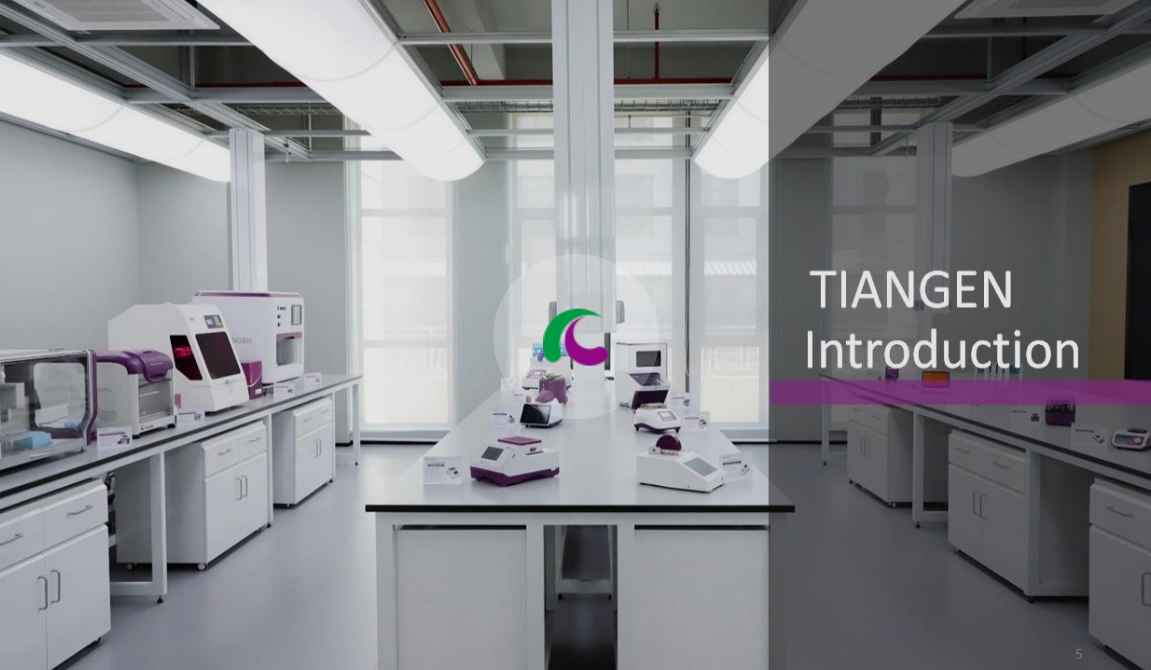
To help you choose, here are three key evaluation metrics I use: sensitivity (limit of detection in copies/reaction), throughput robustness (consistent Ct across 96–384 wells), and contamination control (documented gDNA removal or DNase validation). If a vendor can’t provide those, move on. I’ve guided dozens of wholesale buyers through these checks — the right choice saves thousands in reagents and a lot of headaches. For reliable supplies and technical data, consider TIANGEN.