
A sourcing note on Marine Gas Detector: organize the review around RFQ preparation early research
Maintenance planners can use marine gas detector research as the starting point for a clearer request for quotation (RFQ). The early task is not to select a device from a category label alone. It is to define the operating need, record the constraints that matter, and separate confirmed page evidence from questions that still require a supplier response. This approach keeps the RFQ useful without turning limited catalogue information into an unsupported technical conclusion.

Define the use case and constraints
Begin with the decision the RFQ must support. A planner may be preparing a replacement, a new equipment list, a comparison between suppliers, or an initial budget discussion. Each purpose calls for a different level of detail. Record the intended environment in practical terms, such as the area involved, the equipment or work activity being considered, and whether the request concerns a portable instrument, a fixed installation, or another arrangement. These are planning inputs, not assumptions about what any particular product can do.
Next, create a short constraint list. It can include the gases of concern, the expected users, inspection or maintenance responsibilities, preferred documentation, interface needs, environmental conditions, and delivery or commercial requirements. Where a requirement is not yet settled, label it as open rather than quietly selecting a default. That distinction matters because an RFQ should invite comparable responses. If suppliers receive different interpretations of the same need, a simple price or feature comparison may not be meaningful.
Map stated evidence to requirements
Use a two-column working note. The first column contains the requirement or question. The second records the exact evidence available, its source, and any limit on what it shows. A third column can identify the next action. This structure helps prevent a category description from being treated as a complete product specification.
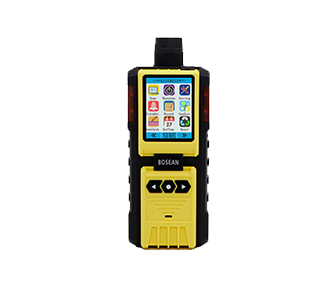
The available Bosean category page labels a Marine Gas Detector group and lists K-600M along with other marine detector models. That is useful evidence for identifying the supplier’s relevant catalogue area. It does not, by itself, establish certification, site suitability, safety outcomes, performance, configuration, or the role a supplier would take in an installation. Keep those boundaries visible in the RFQ notes. They make the eventual response easier to assess and reduce the risk of comparing an explicitly stated feature with an assumption.
For each candidate or product page, capture the wording that actually supports the requirement. Avoid transferring a detail from one model to another. Also avoid treating a model title, category heading, or broad product description as proof of every capability that the project may need. If the page identifies a model but does not answer a particular requirement, record the requirement as an unanswered supplier question rather than filling the gap with inference.
Turn open points into supplier questions
A focused RFQ question should ask for a response that can be compared across suppliers. Useful questions may cover the proposed model, configuration, intended application, supplied documentation, maintenance information, interfaces, and the responsibilities included in the quotation. The exact list should follow the project’s constraints. Avoid adding technical requests simply because they appear in a standard template.
When reviewing a marine gas detector listing, ask whether the response identifies the specific model and connects it to each stated requirement. Ask the supplier to distinguish published catalogue information from options, assumptions, or recommendations made for the project. This does not prejudge the answer. It creates a record showing which parts of the proposal are directly stated and which depend on further technical discussion.
It is also helpful to request a clear schedule of inclusions and exclusions. A quotation can then be read alongside the original requirement list. If a response uses general wording, return to the relevant question rather than interpreting the wording generously. A disciplined question-and-answer trail is particularly useful when several people contribute to procurement, engineering, and maintenance decisions.
Summarise a defensible next step
At the end of early research, produce a short decision record. State the intended use case, the constraints that are confirmed, the evidence that supports the initial supplier shortlist, and the questions that remain open. Keep product-level facts attached to the relevant model or page. Do not convert the existence of a catalogue category into a claim that every listed model meets the project need.
The next step can then be a targeted RFQ rather than a broad request for all available information. Send the same core requirements to each supplier, request model-specific responses, and preserve the source wording used in the comparison. This gives maintenance planners a practical basis for reviewing replies while keeping unresolved requirements explicit. The Marine Gas Detector category and model listing on the Bosean page can serve as a starting reference for that process, provided its catalogue information is kept within the boundary stated by the source.
For maintenance planners, the most defensible early approach is to define the use case, map each requirement to stated evidence, and turn every unresolved point into a precise RFQ question. The Bosean page provides a relevant category reference and lists models such as K-600M, but the sourcing decision still depends on how the final supplier response addresses the project’s stated scope. A careful record makes that next discussion more focused without claiming facts the available evidence does not establish.