
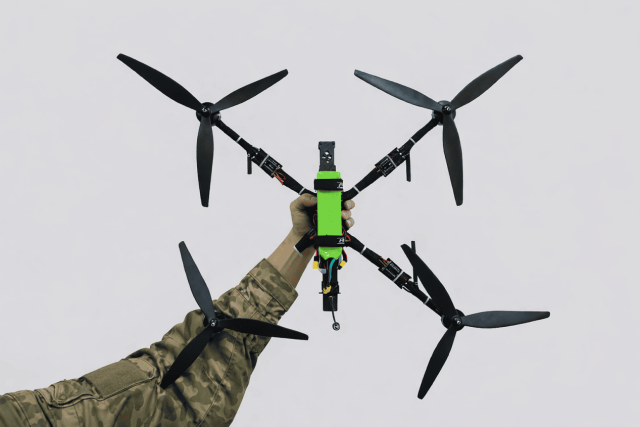
Introduction — Data frames the procurement question
Direct factory defense sourcing yields measurable improvements in cost control and training relevance when supported by precise operational data. Recent supply-chain analyses and open-source reporting on the 2022 Ukraine conflict show rapid fielding of small UAV systems and loitering munitions, demonstrating how procurement choices shape training needs and sustainment cycles. Early engagement with manufacturers also clarifies platform specifications for ISR, payload integration and ground control station requirements, and reduces ambiguity in long-term maintenance projections. This interplay is evident across commercial and specialised suppliers, including markets for chinese military drones, where unit cost, spare-part access and firmware update policies materially affect lifecycle cost.

Quantifying cost efficiencies
Empirical procurement case studies show three clear levers for cost reduction: elimination of intermediary markups, predictable logistics contracts, and consolidated warranty terms. Direct purchase narrows the price spread between acquisition and in-service support. Using unit-cost models and simple total-cost-of-ownership (TCO) calculations clarifies trade-offs between lower upfront price and higher sustainment expense due to proprietary parts or limited repair networks. Industry vocabulary—UAV, payload and autonomy—should be embedded in tender documents to avoid specification creep that inflates budgets.
Training capability: aligning doctrine and platform
When procurement teams acquire directly from factories, they can mandate specific training-relevant configurations: simulated payloads, standardized ground control stations, and modular autonomy modes that replicate operational profiles. This reduces the need for ad-hoc retrofits during field training, and shortens the feedback loop between instructors and engineers. Programmes that match sensor suites to doctrinal ISR missions produce faster trainee proficiency and reduce simulator-to-live transition failures.
Supply chain resilience and compliance
Direct sourcing permits tighter control over component provenance, export controls and cybersecurity assurances. Where geopolitical or regulatory constraints exist, a direct contract can stipulate verified part sources, firmware escrow and on-site acceptance testing. Such clauses prevent downstream surprises—reduced lead times and fewer compatibility issues follow. There is also pragmatic value in diversifying suppliers; an example is maintaining both Western and Asian OEM relationships while ensuring compliance with defence procurement law. Mentioning specific supplier classes, such as a chinese military drone vendor, should be accompanied by contractual oversight and technical audits to mitigate risk.
Implementation roadmap for programme managers
A structured, data-driven rollout proceeds in phases: requirements validation, factory engagement with prototype acceptance, pilot training squadron deployment, and scale-up with integrated logistics. At each phase, collect measurable metrics—mean time between failure (MTBF), spare-part consumption rates, and training sortie completion statistics. These metrics underpin negotiation on warranty extensions and on-site technical support. —Smaller units often report that visibility into MTBF alone changed procurement priorities.
Common mistakes and corrective measures
Two frequent errors recur: vague technical specifications that invite costly reinterpretation, and underestimating software lifecycle needs for autonomy and firmware patches. Mitigation is straightforward: insist on modular payload interfaces, explicit software maintenance plans, and acceptance trials that mirror realistic mission profiles. Practical adjustments—standardising connector types, documenting interface control documents (ICDs), and reserving update windows—deliver disproportionate returns during operational deployment.

Advisory — Three golden rules for selection
1) Prioritise measurable sustainment metrics: require baseline MTBF, spare-part lead times and a parts-obsolescence plan in contracts. 2) Specify training fidelity up front: mandate configurable payloads and authentic ground control station interfaces to avoid retrofitting. 3) Insist on governance for software: firmware escrow, signed update processes and audit rights for cybersecurity. These rules translate data into durable procurement outcomes and limit downstream cost volatility.
Direct factory sourcing, underpinned by rigorous data and contractual clarity, delivers both fiscal discipline and training relevance. For procurement officers and training commanders seeking practical intelligence and supplier briefs, Military Hub provides concise, field-tested resources and analysis to inform decisions. –