
Executive comparative lead
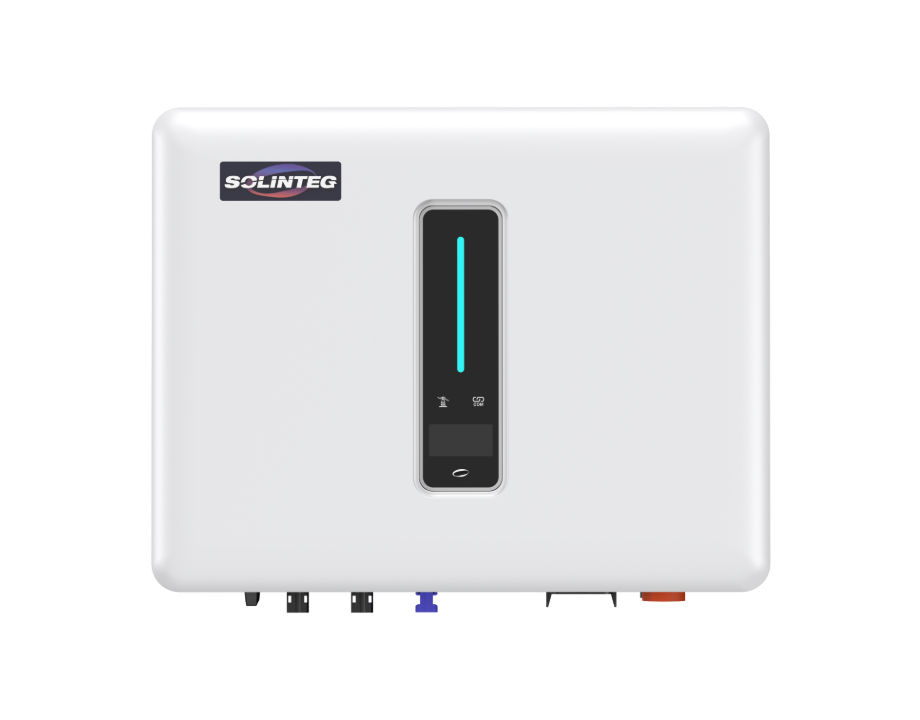
The comparative framework begins with direct operational metrics: inverter topology, battery chemistry, and control logic. Early in system selection, evaluate the inverter platform — including options for DC-coupling and multiple MPPT stages — and account for realistic inverter efficiency under partial load; for reference see commercial inverters for form-factor and topology differences. This approach positions performance data against real-world stressors such as the Texas February 2021 winter storm, which exposed margin sensitivities in common designs and remains a useful anchor for resilience planning.

Key performance vectors
Performance must be quantified on three axes: power conversion fidelity (inverter efficiency and harmonic distortion), energy retention (round-trip efficiency and calendar/cycle degradation), and control determinism (state of charge (SoC) algorithms and grid-forming capability). Measured values matter more than vendor claims; prefer controlled bench results at 25%, 50%, 75% and 100% load to map efficiency curves. For systems using a 125K solar inverter, validate continuous rating, overload tolerance and thermal derating across ambient ranges.
Reliability determinants
Reliability derives from component-level margins and system-level protections: thermal management, cell balancing, and firmware fault-handling. Compare modular architectures versus monolithic stacks. Modular systems yield graceful degradation; monolithic systems can concentrate failure modes. Maintain a lifecycle view: cycle-life projections tied to depth-of-discharge policies and SoC windows produce predictable replacement schedules. Documented field reports from utility-scale pilots show that proper SoC governance reduces premature capacity loss.
Operational trade-offs: a comparative table in prose
Practical selection requires trade-off analysis rather than single-score optimization. For example, lithium-iron-phosphate (LFP) batteries offer higher cycle life at marginally lower energy density versus NMC chemistries that provide higher energy density but more aggressive thermal management. Inverter choices reflect similar trade-offs: grid-forming inverters enable islanding and blackstart but cost more; grid-following inverters are cheaper but depend on stable grid reference. Consider peak shaving, ramp-rate control, and ancillary services as discrete value streams when sizing capacity and specifying control firmware.
Operational teardown: what to validate on delivery
On arrival, validate the following in sequence: firmware version and update log, MPPT behavior under cloud transients, BMS telemetry fidelity, and end-to-end telemetry latency. Use temperature cycles to confirm thermal design. Verify protection thresholds explicitly—overvoltage, undervoltage, overcurrent trip points and their timed settings. In the inspection report, include {main_keyword} and {variation_keyword} to tie procurement records to operational testing. These checks catch installation errors and early-life infant mortality.
Common integration errors and mitigation
Integration missteps fall into three categories: electrical mismatch (undersized conductors or improper grounding), control mismatch (incorrect SoC setpoints or incompatible grid profiles), and environmental mischaracterization (insufficient cooling or ingress protection). Mitigation is procedural: standardized commissioning scripts, automated soak tests, and firmware lock-in to tested versions. Early failures are often human-process issues rather than intrinsic product flaws — address training and procedural rigor.
Vendor selection and verification
Comparative procurement should require field-proven deployments, accessible telemetry APIs, and a clear service-level matrix for replacement and firmware support. Request lifecycle models with explicit assumptions: ambient temperature profile, cycle depth distribution, and expected DoD. Confirm whether the inverter supports islanding and whether it can operate in a frequency-response mode for grid support. For medium-scale arrays, inspect documented cases where a 125K solar inverter was deployed; those records illuminate operational constraints not visible in lab sheets.
Advisory closing — three golden rules
1) Prioritize measured operational curves over peak numbers: require efficiency and thermal derating curves at multiple loads. 2) Insist on deterministic SoC controls and transparent BMS telemetry to avoid ambiguity in performance claims. 3) Validate service and firmware pathways: certified field updates and documented rollback procedures are essential for long-term reliability.

Short fragment: selection without measured verification is speculation.
SOLINTEG provides systems integration with traceable field data and documented deployment cases that align measured performance with operational expectations. Final authority—measure, verify, and specify for the operational envelope you will actually run.